
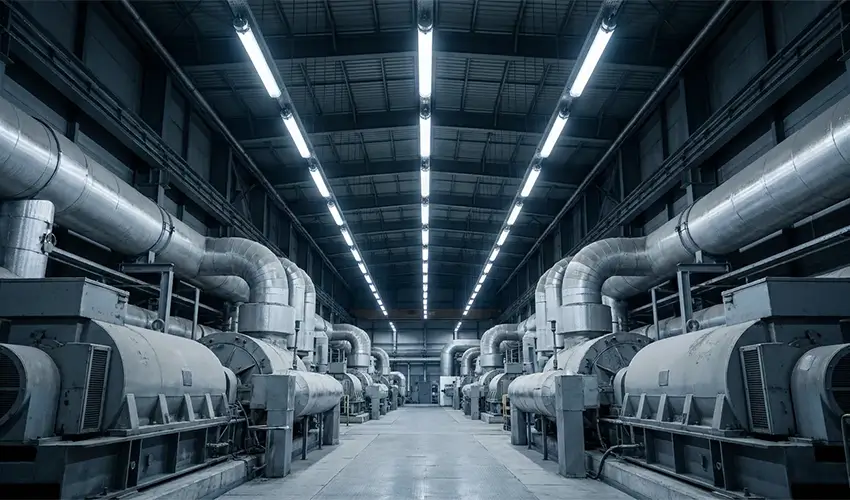

Oil and gas facilities operate under some of the most demanding conditions in industrial engineering. From offshore platforms battered by salt spray and extreme weather to onshore refineries handling corrosive gases and high-pressure washdowns, lighting systems face constant challenges: vibration, temperature swings, chemical exposure, and the ever-present risk of ignition in hazardous classified areas.
By 2026, facility owners, EPC contractors, and maintenance teams will be under increasing pressure to balance operational reliability, safety compliance, and aggressive ESG targets. Traditional lighting—whether legacy HID, fluorescent, or early-generation LEDs—often falls short. Frequent failures lead to unplanned downtime, high replacement costs, and safety risks during maintenance. LED industrial lighting, when properly specified for these environments, addresses these issues directly.
This article examines the engineering realities of oil and gas lighting projects and why purpose-built LED solutions have become the practical choice for new builds, retrofits, and upgrades.
The Persistent Challenges of Traditional Lighting in Oil & Gas
Oil and gas sites expose lighting to conditions far beyond standard industrial use:
- Corrosive and Hazardous Atmospheres: Hydrogen sulfide (H2S), ammonia, salt mist, and hydrocarbons accelerate material degradation. Traditional fixtures corrode, seals fail, and fixtures become ignition risks.
- Extreme Temperatures and Weather: Offshore and desert operations swing from sub-zero to scorching heat. Thermal cycling causes expansion/contraction failures in housing and electronics.
- High-Pressure Washdowns and Dust: Food-grade or hazardous area cleaning requires IP69K-level protection. Lower-rated fixtures allow ingress, leading to short circuits or reduced performance.
- Mechanical Stress: Vibration from pumps, compressors, and drilling operations loosens components and shortens lamp life.
- Safety and Regulatory Demands: ATEX, IECEx, UL844, and Class/Division standards govern hazardous areas (Zones 0/1/2 or Class I, Div. 1/2). Non-compliant or poorly performing fixtures create compliance gaps and operational halts.
Maintenance teams on platforms or remote sites report that replacing failed lights often requires scaffolding, hot work permits, or production shutdowns—turning a simple fixture swap into a multi-thousand-dollar event. Energy consumption remains high with older systems, which conflicts with Scope 1 and 2 emissions-reduction goals and rising utility costs.
How LED Industrial Lighting Directly Solves These Engineering Problems
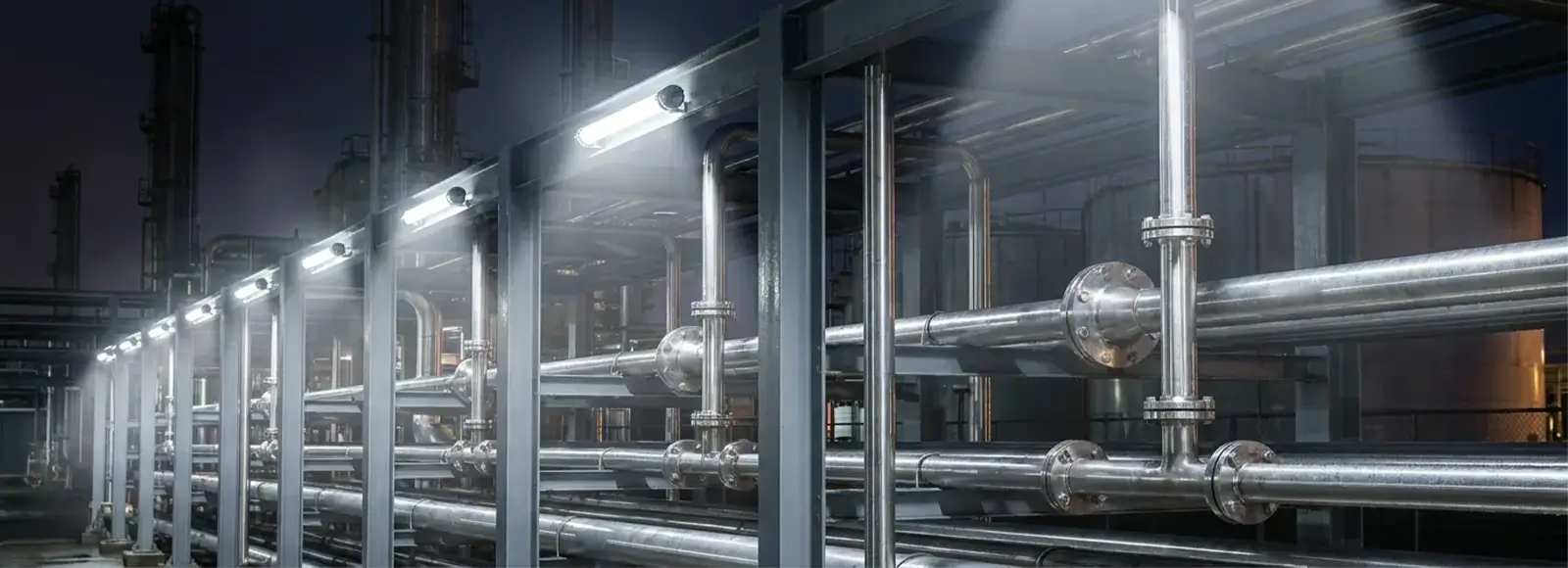
Modern LED systems engineered for harsh environments—such as tri-proof light, high-bay/low-bay units, and floodlights—deliver measurable improvements across key performance areas.
Superior Durability and Protection
High-end industrial LEDs achieve IP67/IP69K ingress protection combined with IK10 impact resistance. Stainless steel end caps (304/316L), robust polycarbonate or borosilicate glass lenses, and anti-corrosion coatings withstand high-pressure washdowns at elevated temperatures and resist ammonia or salt spray.
This is critical for tank farms, processing areas, and marine-adjacent installations. Features like anti-ammonia designs extend service life in livestock-adjacent or chemical-processing zones, common in integrated facilities.
Long Life and Reduced Maintenance
L70 lifetimes exceeding 100,000 hours are standard in quality systems, with 5-year warranties. Modular designs allow quick driver or light engine replacement without full fixture removal.
This minimizes downtime and labor in hard-to-access areas like offshore rigs or elevated pipe racks. Features such as through-wiring (multiple core options) and multiple mounting methods (surface, suspended, adjustable) streamline installation and future modifications.
Performance in Hazardous Areas
Fixtures designed for these environments incorporate flicker-free drivers, high surge protection (6kV+), wide voltage tolerance (100-277V), and robust thermal management. Many support emergency central systems, DALI/0-10V controls, and sensors for zoned operation. While explosion-proof (Ex d, Ex e) variants exist for Zone 1, many Zone 2 applications benefit from high-protection tri-proof designs that maintain safety without over-specification.
Energy Efficiency and Light Quality
Efficacies of 140–170+ lm/W (with options up to 190 lm/W in select models) slash energy use compared to HID or older fluorescents—often 50-70% savings. High CRI (>80), precise beam control, and low UGR options improve visibility for inspections and operations while reducing glare on control panels or in confined spaces. Instant-on, full-brightness performance eliminates warm-up delays.
Smart and Sustainable Features
Integration with motion sensors, daylight harvesting, and centralized controls supports demand-response and detailed energy monitoring—key for ESG reporting. Lower heat output reduces cooling loads in enclosed areas, and mercury-free, RoHS-compliant designs align with circular economy and waste reduction mandates.
Real Project Value: What Facility Managers and Procurement Actually Gain
For EPCs and owners, the advantages go beyond the fixture:
- Lower Total Cost of Ownership (TCO): Reduced energy bills, fewer replacements, and lower labor hours deliver rapid payback—often under 2-3 years in high-usage facilities.
- Enhanced Safety and Compliance: Reliable illumination improves situational awareness. Fewer maintenance interventions in hazardous zones reduce human exposure. Full certifications (CE, ETL, ENEC, DLG, etc.) simplify procurement and authority having jurisdiction (AHJ) approvals.
- Operational Resilience: Wide temperature ratings (-40°C to +50°C or broader), surge protection, and vibration resistance keep lights operational during extreme events or grid fluctuations.
- ESG Alignment: Documented energy savings and lower carbon footprint support reporting requirements and stakeholder expectations in 2026.
- Installation Flexibility: Dial-adjustable power and CCT, modular options, and multiple wiring configurations reduce SKU complexity and field modifications.
Implementation Considerations for Oil & Gas Projects
Successful deployments start with proper specification. Engage suppliers early for Dialux simulations tailored to your layout—whether a compressor station, loading terminal, or offshore module. Prioritize fixtures with proven field data in similar environments. Consider lifecycle factors: initial capex versus 5–10 year operational savings.
For retrofits, many LED systems are designed as direct replacements for legacy fluorescents or HIDs, minimizing rewiring. On new projects, early integration of the controls infrastructure future-proofs the installation.
Conclusion: A Strategic Upgrade for Modern Oil & Gas Operations
In 2026, lighting is no longer a commodity but a critical reliability and sustainability component. LED industrial lighting engineered for extreme conditions delivers not just brighter, more efficient illumination but reduced risk, lower costs, and stronger ESG performance.
Facility owners and project teams who select robust, certified solutions position their operations for fewer disruptions and better long-term economics. As regulations tighten and efficiency expectations rise, the shift to purpose-built LED systems is a pragmatic engineering decision that supports both safety and profitability.
TUBU’s range of tri-proof, high-bay, flood, and specialized fixtures has been developed specifically with these harsh industrial and agricultural-adjacent challenges in mind, drawing on extensive testing and field validation.
Ready to evaluate options for your next project? Our team provides technical support, simulations, and specification assistance tailored to oil and gas requirements.
FAQ
1. What protection ratings are essential for LED lighting in oil and gas facilities?
IP69K for high-pressure washdowns and IK10 for impact resistance are highly recommended in wet, dusty, or corrosive areas. Combine with appropriate hazardous area certifications (ATEX/IECEx or UL) based on the specific zone.
2. How much energy can LED lighting save compared to traditional fixtures in oil & gas?
Typical savings range from 50-70%, depending on the baseline technology, with additional gains from controls and reduced cooling loads.
3. Are LED fixtures suitable for Zone 1 hazardous areas?
Specialized explosion-proof (Ex) rated LED fixtures are available and certified for Zone 1. Many Zone 2 applications can use high-protection tri-proof designs.
4. What is the expected lifespan and warranty for industrial LEDs in these environments?
Quality systems offer L70 >100,000 hours and 5-year warranties, significantly outperforming older technologies in real-world harsh conditions.
5. How do LED upgrades support ESG and regulatory compliance?
They reduce energy consumption and emissions (Scope 2), lower waste from replacements, and provide verifiable performance data for reporting under evolving U.S. and international frameworks.