
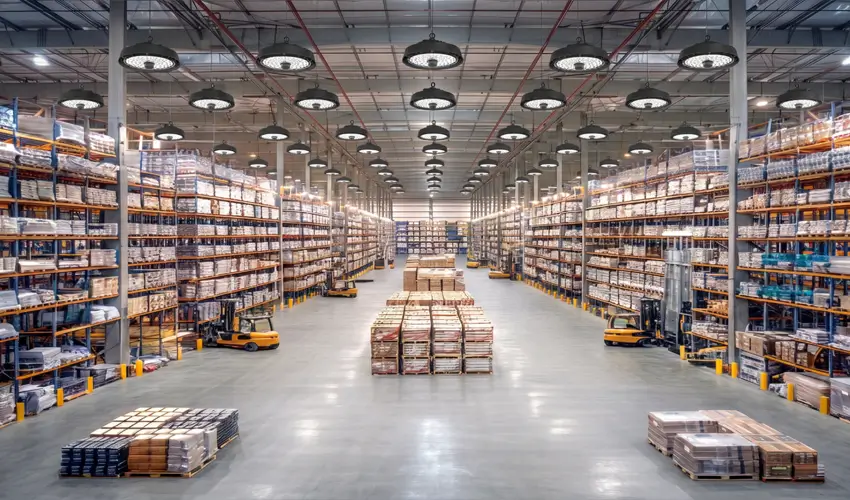

Two LED high bay lights carry the same “L70 50,000 hours” rating on paper.
One has been running in a Texas distribution center for over three years without issues. The other, installed in a cold storage facility in Florida, started showing noticeable lumen depreciation in just 18 months.
The difference isn’t about product quality. It comes down to how far real-world conditions deviate from the controlled environments used for testing—and over time, that gap starts to show.
As a manufacturer with 12 years of experience in LED lighting, TUBU has found through long-term project validation that the actual lifespan of LED high bay lights is determined by thermal management, material durability, and power supply stability. When any of these factors deviates from the intended design conditions, the lifespan curve declines much earlier than expected.
If you are planning to select or replace high-bay lighting, the following content will help you extend the lifespan of your LED high-bay lights and effectively reduce long-term operating costs.
What Determines the Lifespan of LED High Bay Lights?
Any experienced engineer will tell you that the lifespan of a fixture is defined by its weakest component. In LED high-bay lights, the system can be broken down into four key modules—if any one of them is compromised by durability-reducing factors, the entire fixture will fail prematurely.
LED Chips & Packages
The LED package is the core of the light source, but it’s also where buyers are most easily misled—especially by claims like “L70 100,000 hours.” L70 means the light output drops to 70% of its initial level. That’s technically correct.
But think of it as a car rated to deliver 70% of its power after 100,000 miles. On paper, it sounds solid. In reality, if you’re driving fully loaded through the Arizona desert in high temperatures, you’ll likely notice reduced acceleration and rising fuel consumption well before that point—maybe around 80,000 miles.
Driver Power Supply: The Real Weak Point in Lifespan
If the LED chips are the athlete, the driver is its heart and digestive system. And in many cases, this is where things start to go wrong.
There’s no shortage of drivers on the market built with low-cost capacitors and subpar ICs. Under high temperatures, they behave like a basketball slowly losing air—still usable on the surface, but the responsiveness and performance are already gone.
Thermal Design: The Invisible Engine Behind Lifespan
LED chips follow a rule the industry has confirmed time and again: for every 10°C increase in junction temperature, lifespan can drop by roughly half.
This isn’t a rough estimate. It’s rooted in the Arrhenius equation—higher temperatures accelerate chemical reactions within the semiconductor, driving defect growth and accelerating lumen depreciation at an exponential rate.
Put simply, thermal design determines the path. With good heat management, performance declines gradually. Without it, the drop-off is much steeper.
What Factors Shorten the Lifespan of LED High Bay Lights?
Based on thousands of failure cases handled by TUBU’s after-sales technical team, four factors come up again and again—they’re the most common reasons high bay lights start to fail earlier than expected.
High Temperature and High Humidity
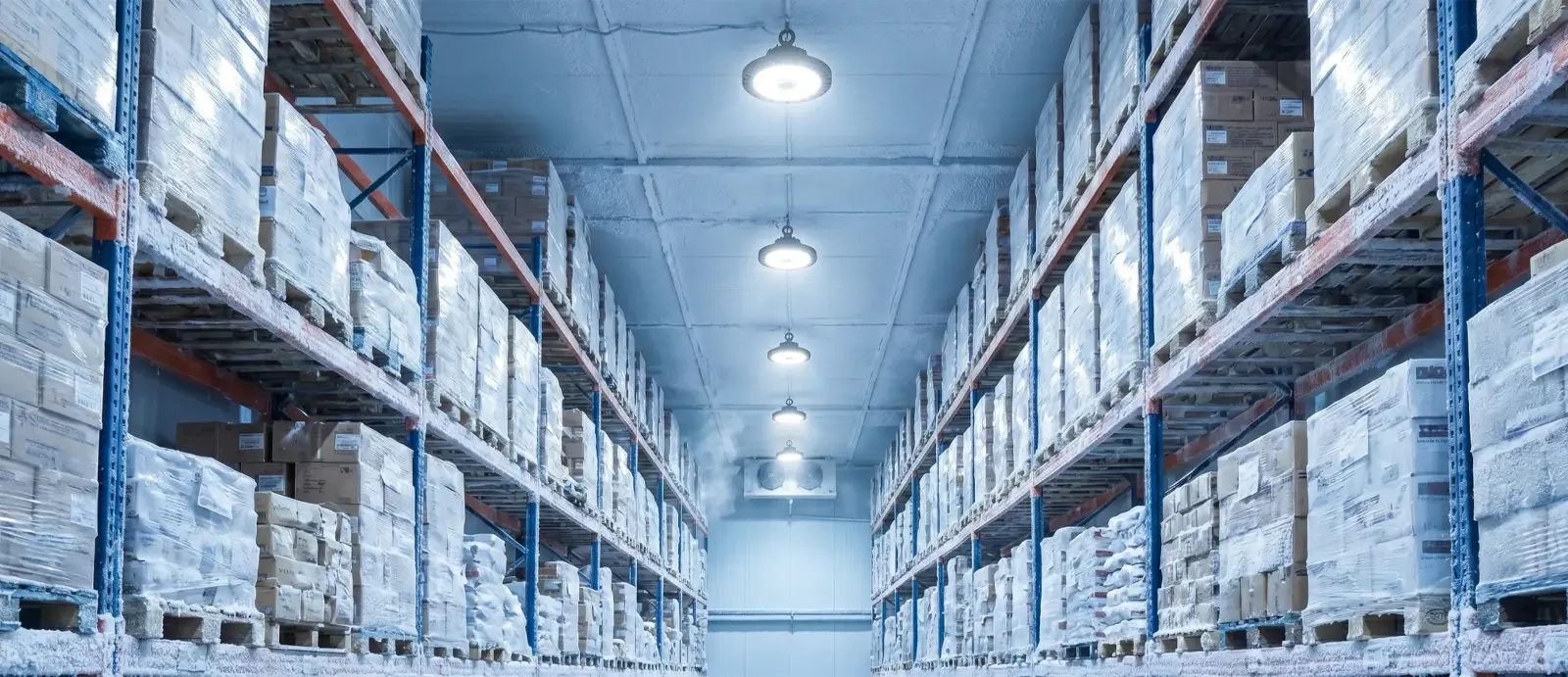
Once ambient temperatures climb above 40°C and humidity exceeds 90%, a kind of “greenhouse effect” can build up inside a standard fixture.
The first component to suffer is usually the electrolytic capacitors in the driver. Inside, the electrolyte begins to break down—like a milkshake left out in the sun, slowly drying out and separating over time.
Corrosive Gases and Dust
Some environments aren’t especially hot or humid, but the air carries ammonia, hydrogen sulfide, or salt mist.
We once handled an urgent case from a large poultry farm. The fixtures had been in service for less than a year when signs of degradation began to appear.
The aluminum end caps showed clear signs of corrosion and surface chalking, while the PC covers experienced material degradation and reduced light transmission—eventually turning cloudy, almost like frosted glass.
The entire batch was at risk of premature failure.
Voltage Fluctuations and Surges
When a nearby forklift starts up, or a distant air compressor shuts down, the power line can experience brief surge spikes—sometimes several times higher than the normal operating voltage.
The impact on LED components is cumulative. It doesn’t fail instantly. Instead, repeated electrical stress builds up over time—like tapping a windshield again and again. The cracks don’t appear right away, but eventually, they spread.
Installation Errors
Some failures are simply the result of how “protection” is understood during installation.
We’ve seen this in a food processing facility. The failed fixtures all showed the same issue—heat buildup. During installation, they were mounted directly against a rock wool-insulated ceiling, with no space left for airflow.
The IP65 sealing already limits airflow, and the added insulation trapped the heat even further. After about four hours of operation, the driver compartment temperature stabilized at around 92°C—well above the 85°C rating of the electrolytic capacitors. The result was predictable: drivers began failing in batches within three months, mostly due to capacitor swelling.
Another common issue comes from drainage design being overlooked. Most IP66 fixtures include breather holes and drainage paths at the bottom of the housing. These are there to balance internal pressure and allow condensation to escape.
If those openings are blocked during installation, or if drainage paths are compromised, moisture from day–night temperature cycles gets trapped inside the fixture. Over time, this leads to electrochemical migration on the PCB surface, eventually causing irreversible circuit damage.
Three Key Methods to Extend the Lifespan of LED High Bay Lights
1. Allow Adequate Clearance for Heat Dissipation During Installation
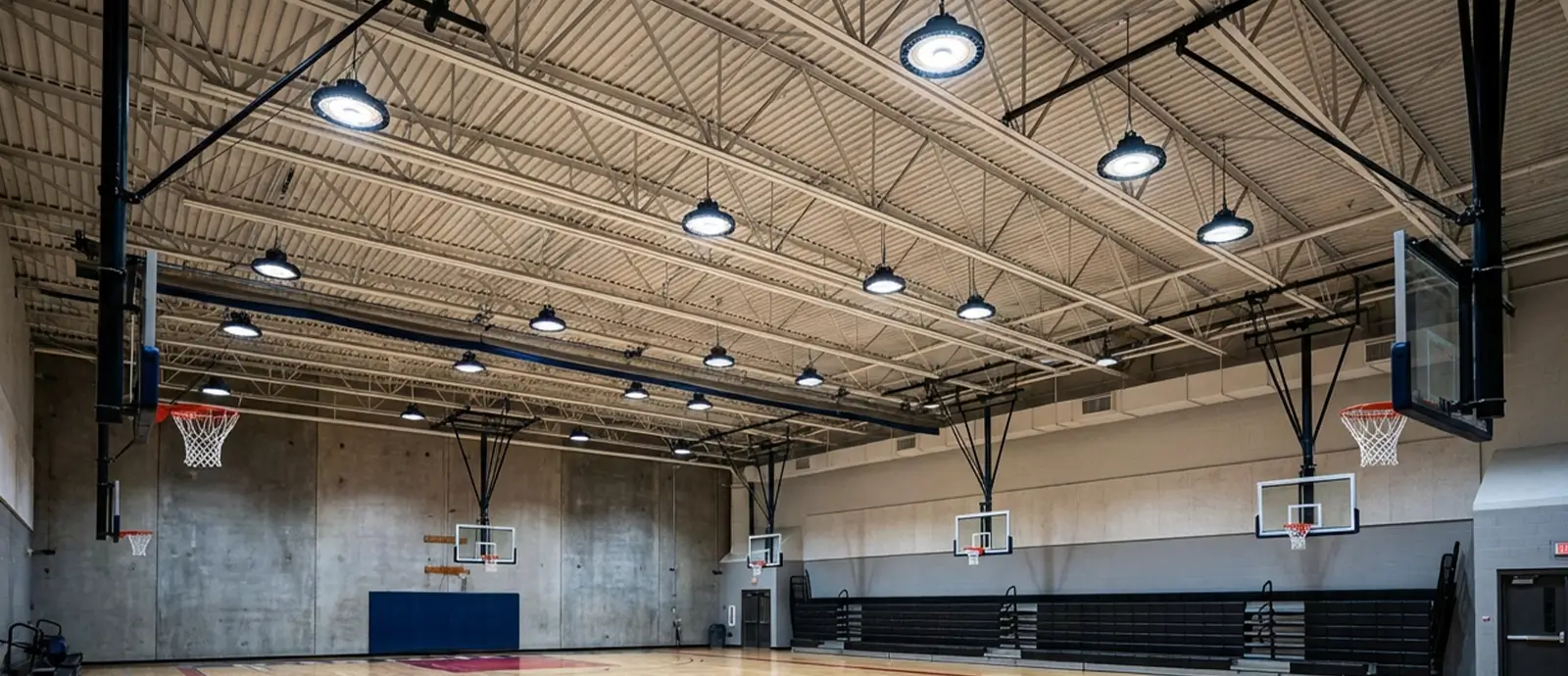
Make sure there is at least 5 cm of open space around the heat sink to allow proper airflow. If recessed installation is unavoidable, choose fixtures designed with active ventilation.
Think of it this way—you wouldn’t put a diesel generator inside a closed cabinet. Without air exchange, no cooling method will be effective.
2. Use Dimming and Sensor Controls to Reduce Load
From a reliability standpoint, running fixtures at full load around the clock is one of the least efficient ways to use component life.
LED lumen depreciation is closely tied to junction temperature, which in turn depends on drive current. When power is reduced to around 70%, junction temperature typically drops by 8–12°C.
Based on Arrhenius behavior, this can translate into roughly a 40–50% reduction in lumen depreciation rate.
The driver benefits as well. Lower power means reduced ripple current, which can bring internal temperatures down by 5–10°C. Given the “10°C rule” for electrolytic capacitors, that reduction can nearly double their service life.
In practice, this is straightforward to apply. In warehouses with low night activity, base lighting can be set to 20–30%, with microwave sensors triggering full output when needed. A reliable 1–10V or DALI driver system is enough to make this work.
3. Annual Inspection and Preventive Maintenance
Don’t wait for a failure to tell you something’s wrong. A quick yearly check is usually enough to catch issues early.
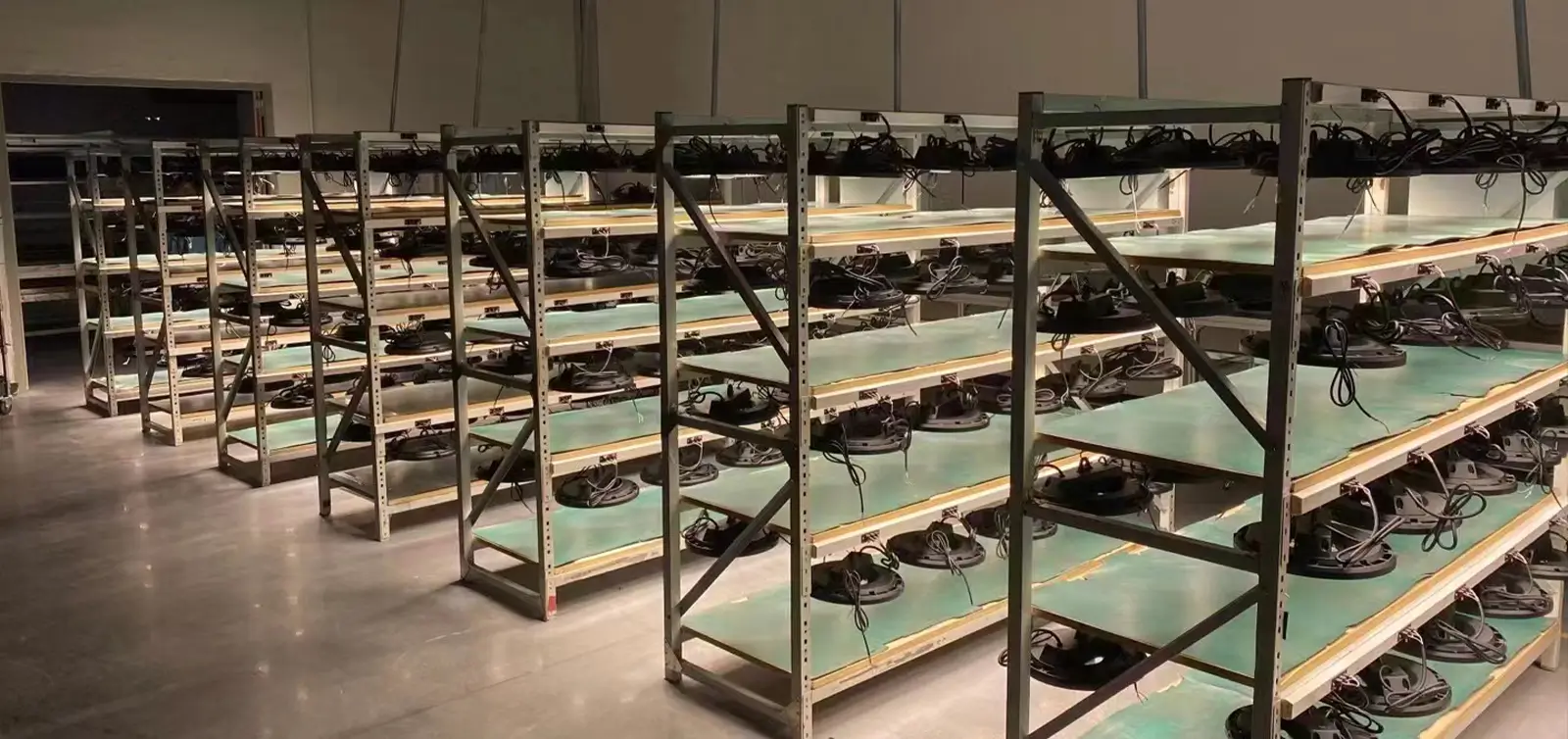
Run a scan with an infrared thermometer and look for unusual heat on the fixture housing. Pay extra attention to the power input terminals—loose connections are more common than people think. Even a slight increase in contact resistance can push local temperatures up by 30°C, which is often how thermal problems start.
It’s a simple routine. No specialist needed. But in practice, it can eliminate a significant portion of early failures.
How Product Selection Determines Lifespan
Most lifespan outcomes are set at the selection stage.
Three factors tend to matter the most:
1. Housing Material
For high bay fixtures, die-cast aluminum is the safer choice.
It’s a one-piece structure—no joints, no gaps—so the thermal path stays continuous and mechanical strength is higher.
Stamped steel or extruded aluminum rely on bending or assembly. That introduces weak points in both heat transfer and long-term durability.
In harsh environments, surface treatment matters just as much. A proper powder coating with salt-spray resistance helps slow down oxidation and coating degradation, especially in high-humidity or coastal conditions.
TUBU’s F12 series Smart Adjustable LED High Bay Light with Sensor and F9 series HIGH-Temperature Ambient High Bay Light use RAL9005 black die-cast aluminum housings with corrosion-resistant coatings designed for these environments.
2. Third-Party Certifications
For the EU market, CE and RoHS are baseline requirements.
If those aren’t in place, the discussion usually ends there.
Beyond that, certifications like FCC and ENEC indicate tighter control over safety and manufacturing consistency.
They don’t define lifespan directly—but they reduce risk.
3. Serviceability and Flexibility
Fixtures that can adapt in the field tend to last longer in practice.
Models with adjustable wattage and color temperature allow one SKU to cover multiple applications.
That reduces over-spec or under-spec usage, which is a common cause of early failure.
Fewer mismatches. More stable operation over time.
How to Use LED High Bay Lights Properly
Frequent Switching On and Off
High bay lights aren’t designed for constant on-off cycling. Every cold start puts stress on the driver—especially the electrolytic capacitors and the PFC inductor. Each cycle introduces a surge event.
In facilities with shift-based operations, it’s better to keep the fixtures at a low power level during transitions instead of shutting everything down and restarting. Frequent switching accelerates capacitor aging.Over time, that brings the L70 timeline forward.
Proper Cleaning Method
Dust buildup on heat sinks works like insulation.It traps heat and reduces cooling efficiency.
A simple maintenance routine helps:
Blow out the fins with compressed air every six months.
Two points matter:
- Power must be off, and avoid wiping with a wet cloth.
- Moisture left on the surface can accelerate metal oxidation.
Pay Attention to Changes in Power Conditions
Power conditions don’t stay constant. When large equipment—press machines, welders, or variable frequency drives—is added, the lighting circuit can be affected by harmonics and transient overvoltage. In these cases, surge protection at the distribution level becomes important.
We’ve seen this more than once:
- A factory upgrades its production line but leaves the lighting circuit unchanged.
- Within a few months, newly installed high bay lights begin to fail in batches.
Conclusion
The lifespan of an LED high bay light is never just a number on a spec sheet—it’s the result of design, environment, and real operating conditions working together.
At TUBU, every fixture is tested across vibration, heat dissipation, and corrosion resistance to ensure stable performance in demanding environments.
If your project involves high temperatures, heavy dust, or corrosive conditions, choosing a high bay light engineered for the job will directly impact both service life and long-term maintenance costs.
If you need LED high bay lights built to stand the test of time, get in touch with the TUBU team.