
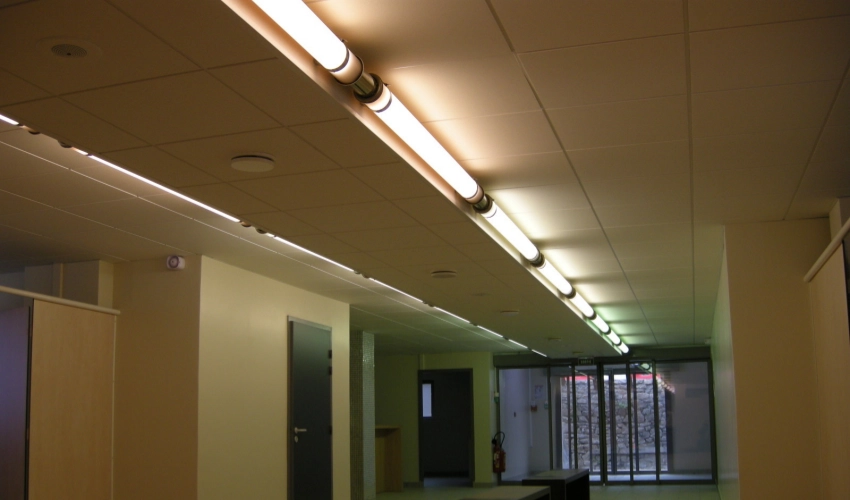

In office ceilings, industrial buildings, and marine interior lighting projects, multiple LED tubular lights can be installed end to end to create a continuous lighting layout for longer areas.
For projects requiring approximately 3 metres of lighting, two 1452 mm LED tri-proof tubular lights can be combined. However, achieving a reliable continuous installation requires careful consideration of electrical wiring, mechanical fixing, and overall protection.
LED luminaires use different connection structures. Some rely on dedicated connectors for mechanical joining, while others use straight-through wiring or quick terminals to extend the power supply to the next luminaire.
This article uses the TUBU tubular-style LED Tri-Proof Light as an example to explain how two LED tubular lights can form a continuous lighting run close to 3 metres, along with the key technical considerations during installation.
How to Choose LED Tubular Lights for a 3-Metre Continuous Installation?
The first step is to calculate the actual fixture dimensions rather than relying solely on the nominal product length.
The TUBU Tubular Style LED Tri-Proof Light is available in different lengths and wattages. The TBL95F series has a fixture length of 1452 mm, making it suitable for planning a continuous lighting run close to 3 metres.
The combined length of two fixtures is:
1452 mm × 2 = 2904 mm
Therefore, two TBL95F fixtures have a combined fixture length of 2904 mm, which is close to 3 metres but not exactly 3000 mm. The final installed length also depends on the spacing between fixtures and their end-cap structures.
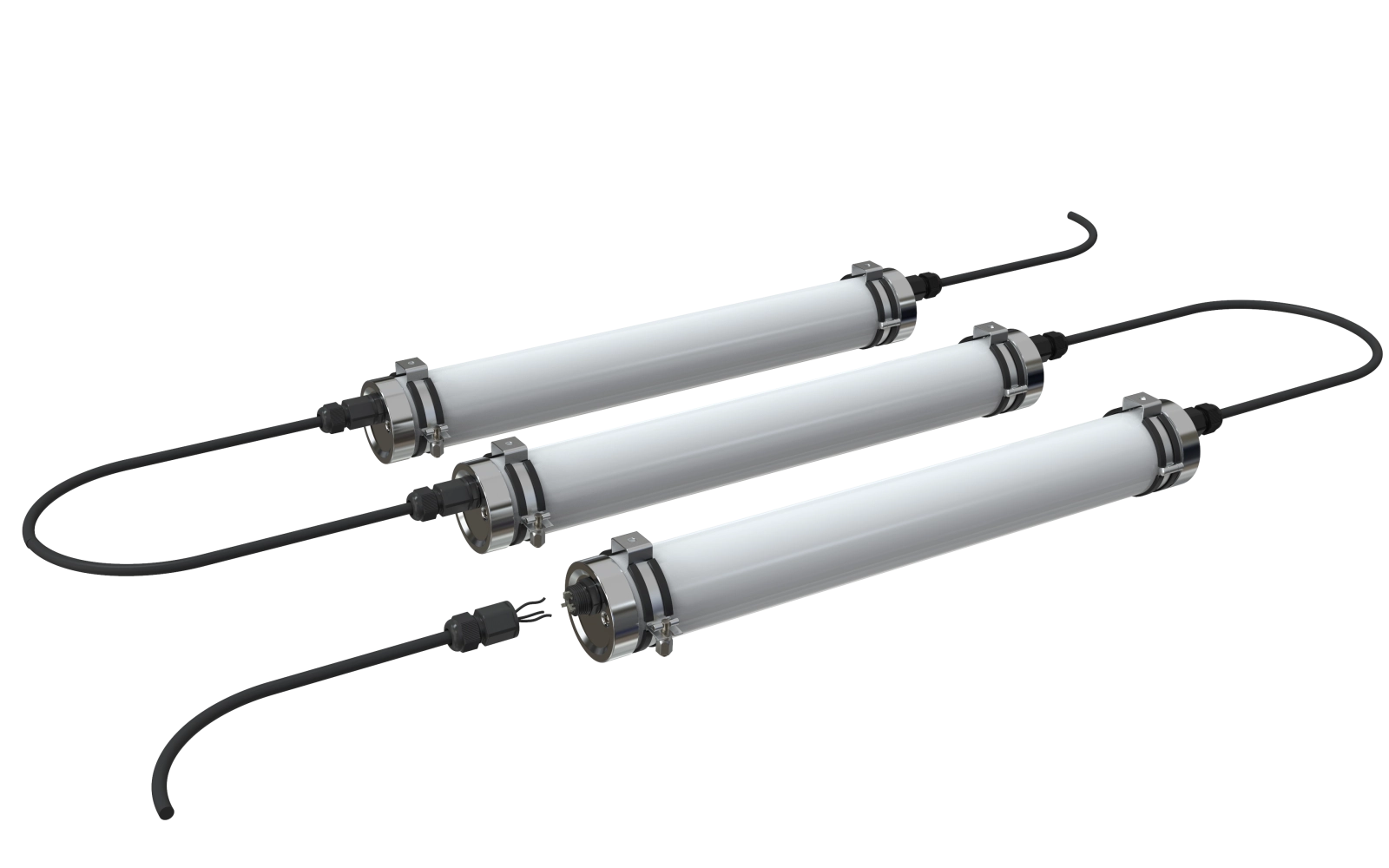
TUBU product specifications:
Model | Fixture Length | Rated Power | Luminous Flux |
|---|---|---|---|
TBL92F-20W-T | 552 mm | 20W | 2600 lm |
TBL94F-40W-T | 1152 mm | 40W | 5200 lm |
TBL95F-50W-T | 1452 mm | 50W | 6500 lm |
TBL95F-60W-T | 1452 mm | 60W | 7800 lm |
For two TBL95F fixtures, the following configurations are available depending on the lighting requirements:
- 2 × 50W: Total rated power of 100W, with a combined nominal luminous flux of 13,000 lm.
- 2 × 60W: Total rated power of 120W, with a combined nominal luminous flux of 15,600 lm.
These figures are the arithmetic totals of the individual fixture specifications. Actual lighting performance should also be evaluated based on mounting height, light distribution, and room conditions.
What Are the Connection Methods for LED Tubular Lights?
A continuous installation requires consideration of both mechanical connections and electrical wiring. They serve different purposes, and connecting the electrical wiring does not mean the fixtures are mechanically secured.
Straight-Through Wiring
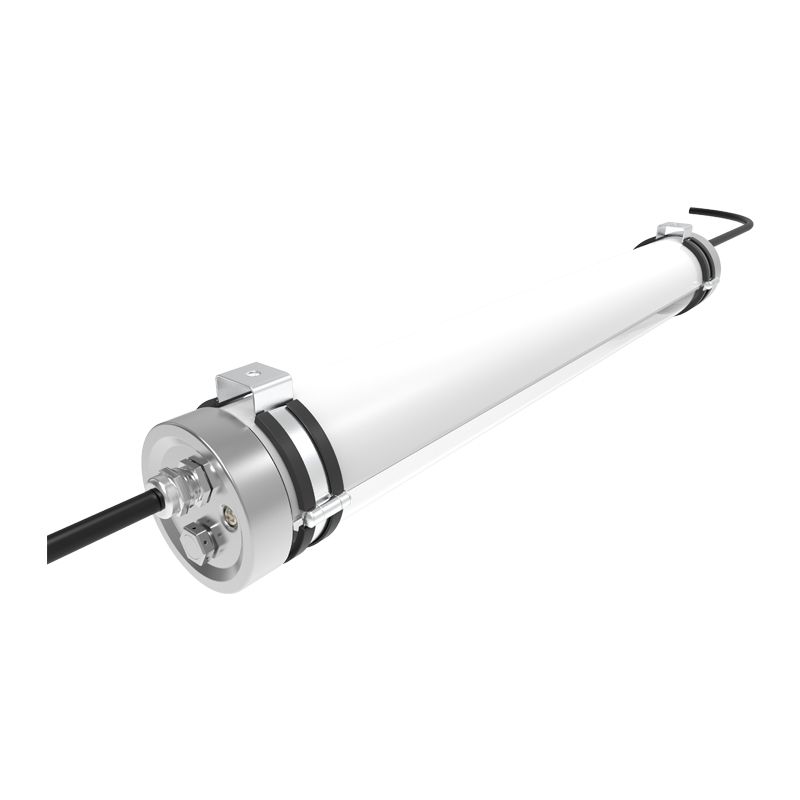
Straight-through wiring is a common method of extending the power supply between multiple luminaires.
The power supply enters the first luminaire and is then routed through its internal wiring or designated connection structure to the next luminaire.
The TUBU Tubular Style LED Tri-Proof Light offers optional 3-core and 5-core straight-through wiring configurations.
The appropriate cable core configuration depends on the electrical functions required. For example, power supply, protective earth, and control wiring may require different conductor arrangements. The exact wiring definitions should always be checked against the product wiring diagram.
This configuration is suitable for projects where multiple luminaires are arranged along the same lighting circuit. However, the maximum number of connected fixtures and the total electrical load must still be verified.
Quick Terminals
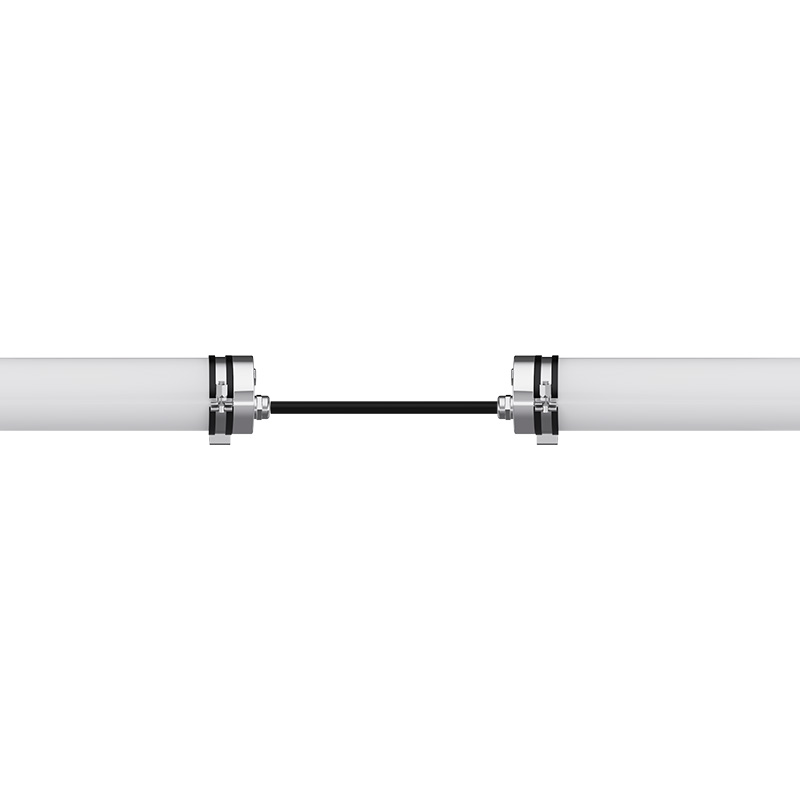
Quick terminals are primarily used to connect electrical wiring between luminaires.
TUBU offers a Quick Terminals configuration. During installation, the relevant terminal compartment is opened to complete the wiring. This configuration supports electrical connections between multiple LED luminaires.
Compared with straight-through cables, quick terminals provide a convenient way to make electrical connections according to site wiring requirements.
Before installation, check the terminal's rated current, compatible conductor size, available wiring space, and protection structure.
Cable Glands
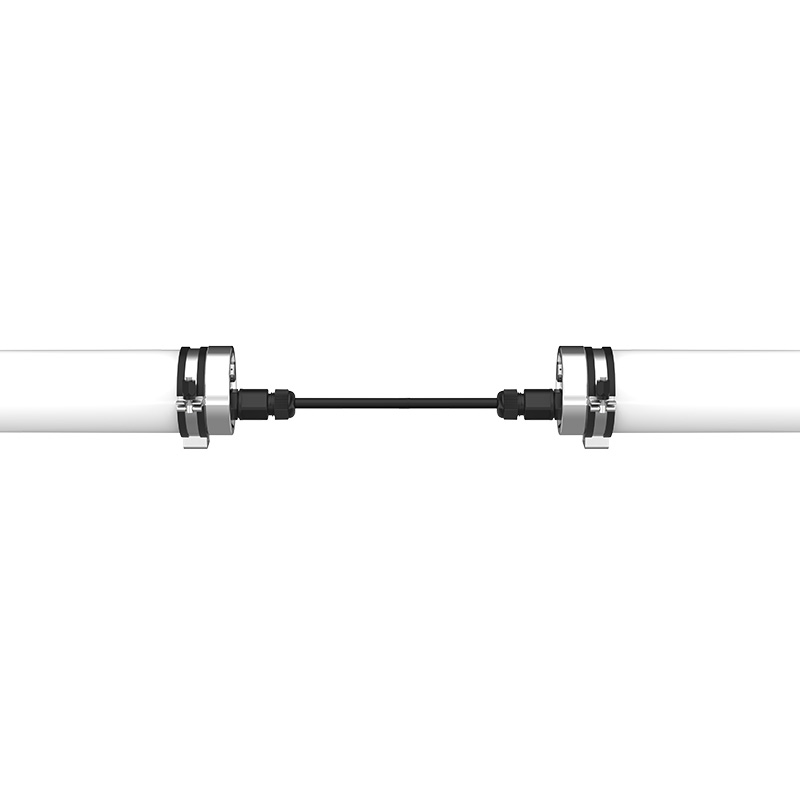
A cable gland is used to secure and seal a cable where it enters a luminaire.
Its function differs from that of straight-through wiring and quick terminals. A cable gland itself should not be considered a connector for joining two luminaires.
Where the luminaire's protection performance needs to be maintained, the cable gland should be selected according to the cable diameter, gland specifications, and product design.
Mechanical and Electrical Connections Must Be Verified Separately
In continuous lighting installations, the mechanical fixing system and electrical interconnection system may be two separate components.
Mechanical connections secure adjacent luminaires and prevent unwanted movement or misalignment. Electrical connections extend the power supply to subsequent luminaires.
When confirming the connection arrangement for the TUBU TBL95F, check the following separately:
- Whether dedicated mechanical joining accessories are required between fixtures.
- Whether each luminaire needs independent mechanical fixing.
- The exact configuration of straight-through wiring or quick terminals.
- Whether the connection points meet the product's protection requirements.
The fact that two fixtures touch end to end, or that their electrical wiring is connected, does not mean the mechanical installation is complete.
What Electrical Factors Should Be Considered When Connecting Multiple LED Lights?
When you connect multiple LED luminaires with straight-through wiring or quick terminals, the electrical design must account for total power, circuit loading, and driver configuration.
Using two TBL95F fixtures as an example:
Configuration | Power per Fixture | Total Power |
|---|---|---|
2 × TBL95F-50W | 50W | 100W |
2 × TBL95F-60W | 60W | 120W |
According to the TUBU product specifications, the input voltage is AC 200–240V / 100–277V, 50/60Hz, with a power factor of 0.90.
The following factors should also be checked before wiring:
Circuit Load
Calculate the total load based on the number of luminaires and their rated power. Make sure the supply circuit, circuit breaker, and wiring terminals are appropriately rated.
Maximum Number of Connected Fixtures
The maximum number of luminaires allowed on a continuous circuit cannot be determined by total wattage alone. Driver inrush current, terminal ratings, and manufacturer-specified connection limits must also be considered.
Cable Specifications
Select the appropriate cable size according to the supply voltage, cable length, installation method, and current. Voltage drop should also be checked to ensure it remains within acceptable limits.
Grounding and Insulation
Complete protective earthing, insulation, and electrical connections according to the luminaire's electrical design and applicable regulations. All wiring must be carried out with the power isolated by qualified electrical personnel.
The maximum number of connected fixtures must be confirmed using the electrical instructions for the specific TUBU model. It should not be determined solely by the luminaire wattage or cable core count.
How to Ensure Secure Fixing and Proper Alignment During Continuous Installation?
In addition to electrical connections, continuous lighting installations require proper mechanical support.
Depending on site conditions, luminaires can generally be installed using surface mounting or suspension mounting.
Surface Mounting
Surface mounting is suitable for office ceilings, corridors, and other locations with appropriate mounting structures.
During installation, pay attention to the following:
- Use the luminaire's mounting holes to determine the fixing positions.
- Select fasteners suitable for the ceiling material.
- Secure each luminaire separately to avoid placing unnecessary mechanical loads on the connection points.
- Keep the fixtures aligned to minimise height differences and gaps between adjacent units.
If the product does not have a verified dedicated mechanical joining structure, the fixture ends should not be relied upon to support the installation.
Suspension Mounting
Suspension mounting is suitable for high ceilings, open spaces, and locations where the installation height needs to be adjusted.
TUBU products support suspension mounting, but the specific support points should be determined according to the luminaire structure and installation instructions.
For continuous rows of luminaires, pay particular attention to the support at both ends of the row and around the connection points between adjacent fixtures. This helps prevent unnecessary suspended loads from being transferred to the joints.
The required number and position of suspension points should be determined based on fixture weight, suspension accessories, and the actual mounting structure.
What Should You Confirm with the Manufacturer Before Purchasing LED Tubular Lights for Continuous Installation?
Before finalising the connection arrangement for two or more luminaires, include the following items in the technical confirmation checklist:
Item to Confirm | Details Required |
|---|---|
Luminaire Model | TBL95F-50W-T or TBL95F-60W-T |
Fixture Length | 1452 mm per fixture |
Total Installation Length | 2904 mm for two fixtures, with additional confirmation of connection spacing |
Connection Configuration | 3-core or 5-core straight-through wiring, or quick terminals |
Mechanical Fixing | Whether additional joining brackets or fixing accessories are required |
Electrical Parameters | Total power, input current, and terminal ratings |
Maximum Connection Quantity | Maximum number of luminaires permitted on each circuit by the manufacturer |
Installation Method | Surface mounting or suspension mounting |
Protection Requirements | Protection performance of the luminaire body and connection points |
Project Certifications | Compliance documents required for the target market and project |
If the project requires an exact installation length of 3000 mm, provide the actual installation dimensions. The final length should be confirmed after accounting for the fixture housings, connection spacing, and end structures.
For projects with special environmental requirements, also provide the installation location, operating conditions, and applicable standards. This allows the manufacturer to assess the appropriate product configuration.