
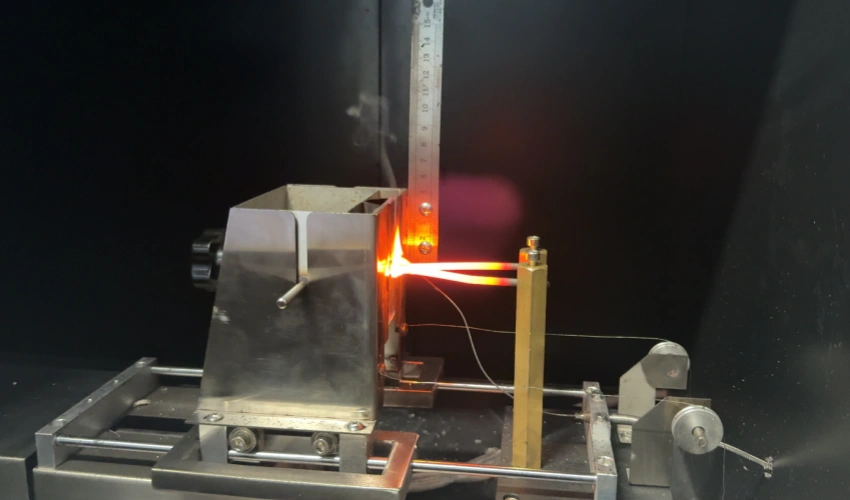

For LED lighting importers, brands, OEM/ODM buyers, and engineers specifying products for commercial or industrial installations, fire safety compliance is non-negotiable. A single failure in abnormal overheating conditions can lead to product recalls, project delays, insurance complications, or worse. The Glow Wire Test (per EN IEC 60695-2-11) is a critical electrical safety test that directly evaluates how plastic components in LED fixtures behave under simulated fault conditions.
This article examines the test’s engineering relevance for LED lighting, what the results actually mean in practice, and how manufacturers use material and design choices to achieve reliable performance.
What Is a Glow Wire Test?
The Glow Wire Test applies a heated resistance wire (glow wire) to the surface of a non-metallic part for 30 seconds to simulate localized overheating from electrical faults, such as a poor connection or component failure. It measures ignition risk, flame duration, and the potential for flaming droplets to spread fire.
In LED lighting, the test is particularly relevant for plastic housings, diffusers, terminal covers, and insulating parts near current-carrying components. It is not a general flammability rating but a targeted assessment of behavior under realistic thermal stress.
Why Glow Wire Testing Is Critical for LED Lighting
LED fixtures often operate in enclosed or high-ambient environments where electrical faults can generate intense localized heat. Unlike traditional lighting, modern LED tri-proof lights and similar products use extensive polymer housings for durability and ingress protection. If these materials ignite easily or sustain a fire, a minor internal fault can escalate.
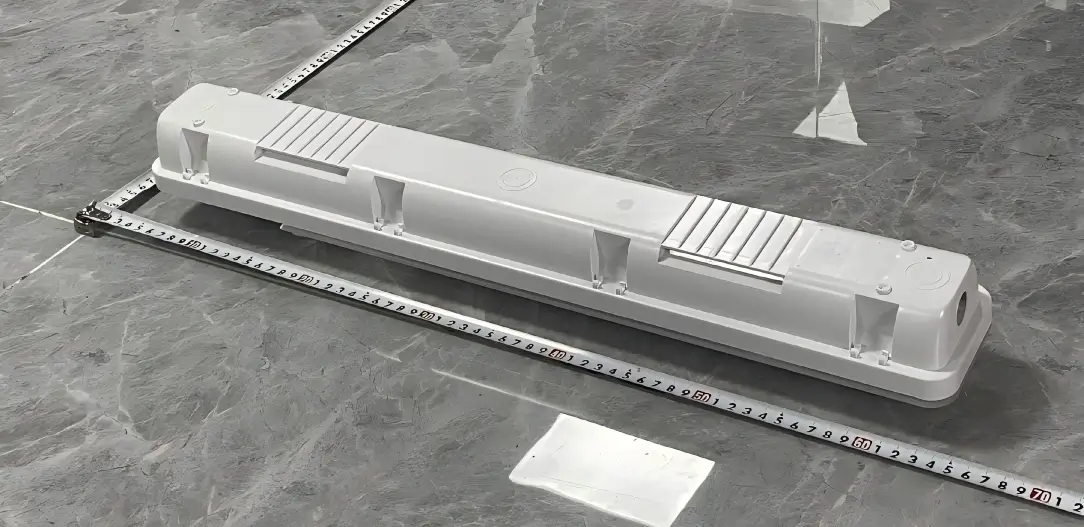
How the Glow Wire Test Works in Practice
1. Non-metallic material parts test
650°C±10°C. Apply the glow-wire tip to the specimen surface (thickness 23mm) for 30s. Flame duration and whether the drip ignites the tissue paper. Applicable to enclosures, insulating gaskets, and other non-metallic parts.
2. Connectors & current-carrying parts support
750°C±10°C. For insulating materials holding current-carrying parts in position (terminals, substrates). Glow-wire applied for 30s; after removal, flame duration < 30 s, and tissue paper below is not ignited.
3. Severe current-carrying support
850°C±10°C. Applicable to insulating materials near current-carrying connections in high voltage. Glow-wire applied for 30s; specimen shall not ignite, or if ignited, self-extinguish within 30s, and no flaming drip ignites the tissue paper.
4. Finished luminaire glow-wire test
650°C / 750°C (depending on mounting class). Perform glow-wire test on potential overheating parts of finished luminaires according to mounting surface and insulation requirements. Apply temperature for 30s; observe no sustained burning and no flame spread to surrounding components.
5. PCB substrate glow-wire test
750°C±10°C. Perform glow-wire test on non-metallic substrate of PCB for lamp controlge0s; requirement: no ignition, or if ignited, flame extinguishes within 2 seconds (according to IEC 60695-2-11 stringent requirements).
6. Plastic housing/Lens cover test
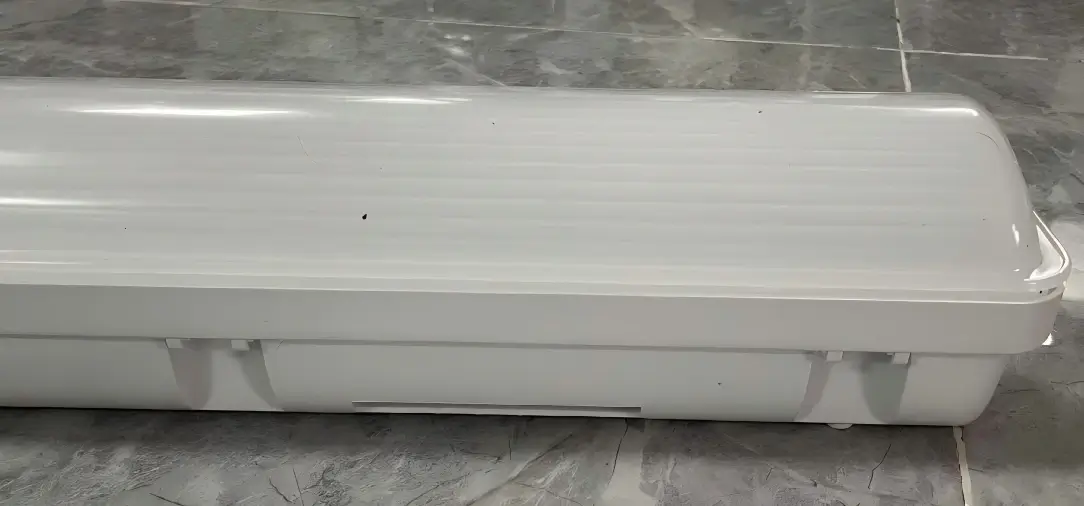
7. High-voltage insulation parts
850°C/960°C (as required). For internal isolation barriers and high-voltage insulation sheets inside s, perform a glow-wire test at 850°C or higher (960°C) to ensure material flammability meets reinforced insulation requirements under faulty conditions.
8. Glow-wire flammability index (GWFI)
Temperature gradient test (650°C→960°C). According to IEC 60695-2 12, determine the material GWFI rating through temperature gradients. Record the highest temperature at which the specimen does not ignite, or the critical value where flame extinguishes within 30smaterial selection reference.
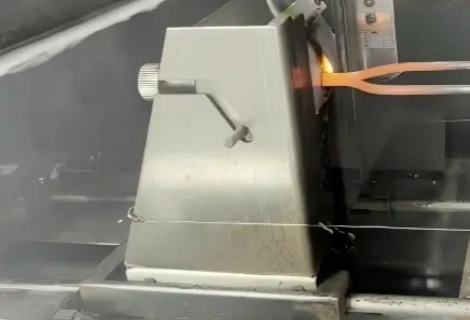
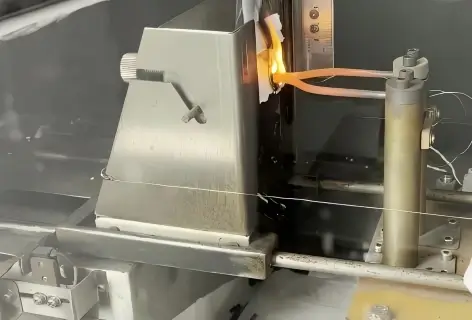
TUBU Glow Wire Test Case
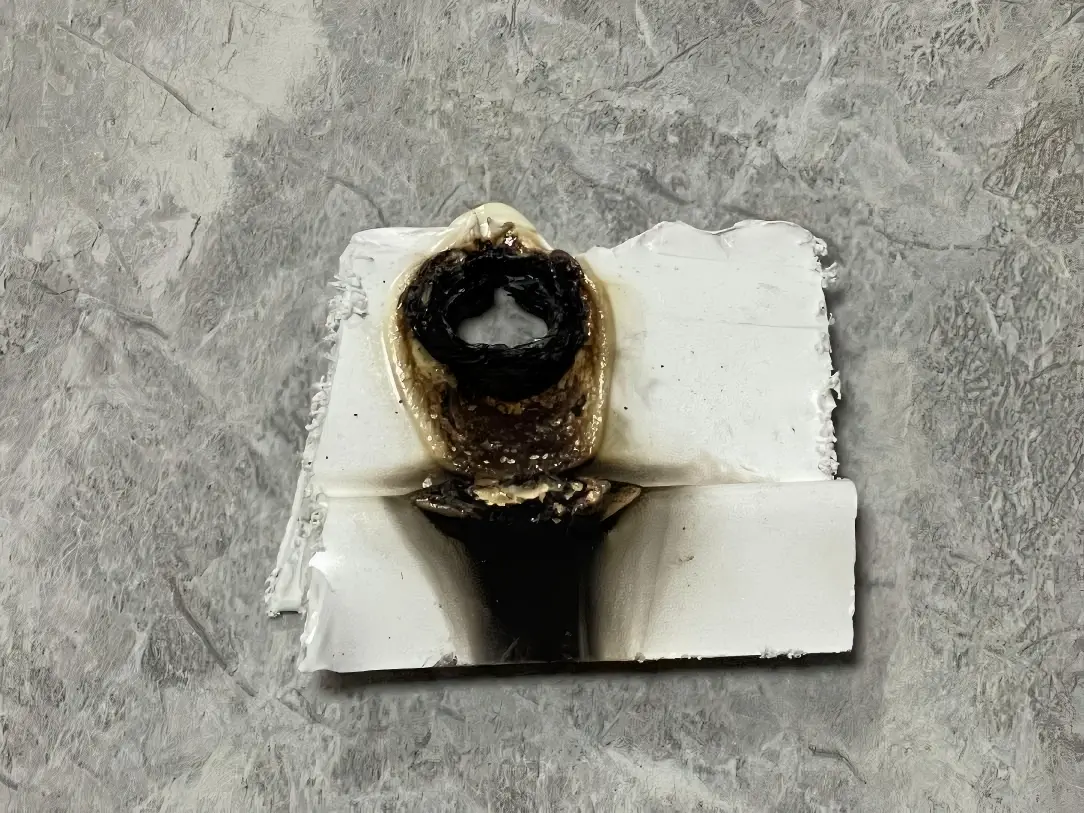
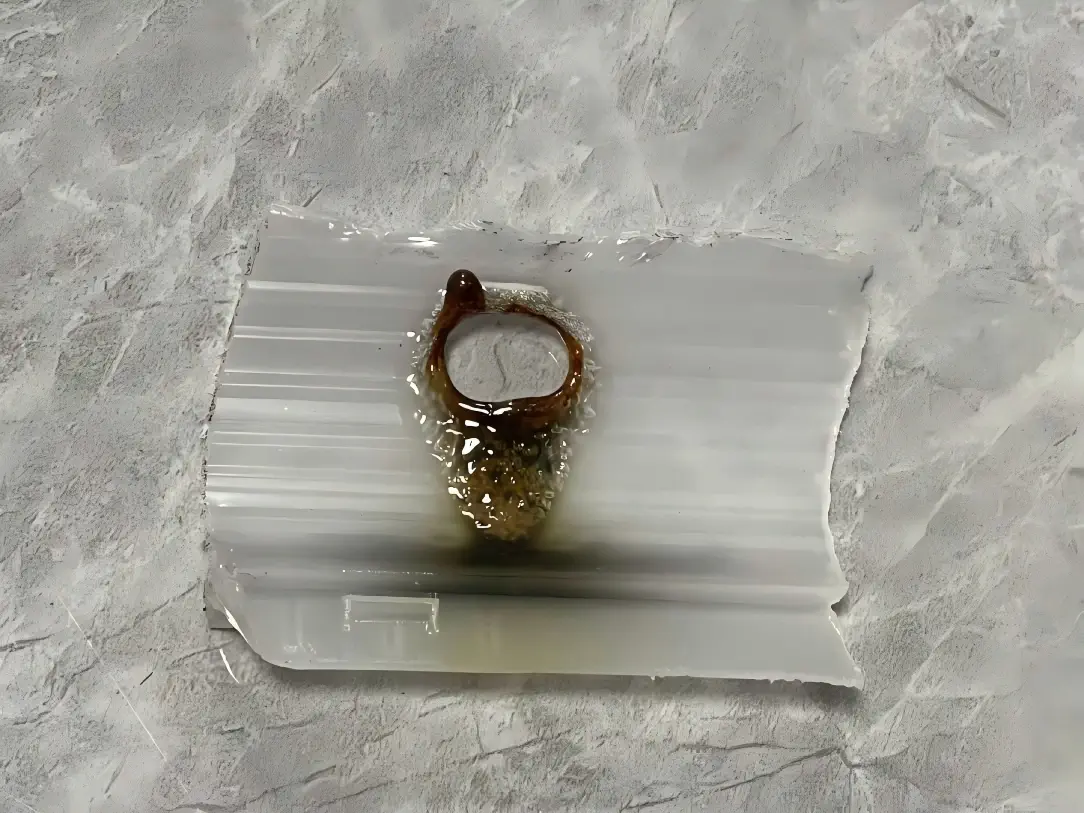
We tested both plastic housings of our L10-K Series using the 850°C glow wire test. The test results are as follows:
- Plastic parts (White opaque plastic shell): 6 mm flame height, 7 seconds burning after wire removal.
- Plastic parts (Semi-transparent plastic shell): Semi-transparent shell: 9 mm flame height, 13 seconds burning after wire removal.
Both samples passed with flame durations well below the 30-second limit and produced no flaming drips that ignited the tissue paper.
Common Reasons Products Fail Glow Wire Testing
Failures typically occur when:
- Flame persists beyond 30 seconds after wire removal.
- Flaming drips ignite the tissue paper.
- Materials exhibit severe deformation, burn-through, or sustained glowing that compromises structural integrity.
FAQ
Why 850°C for LED lighting plastics?
It simulates severe conditions relevant to current-carrying parts in higher-power or enclosed fixtures, providing a robust safety margin.
Does passing at 850°C guarantee overall fire safety?
No single test does, but it is a key indicator of material performance under localized overheating. It complements other evaluations (IP rating, electrical insulation, etc.).
How does this affect project acceptance?
Many specifications and tenders require Glow Wire compliance for plastic components. Documented passes simplify approval processes and demonstrate due diligence.
Can design changes improve results?
Yes. Material upgrades and geometry adjustments are standard ways manufacturers achieve consistent compliance.
Conclusion: Engineering Fire Safety into LED Lighting
The Glow Wire Test verifies that plastic components in LED lighting can withstand abnormal heat without significantly increasing the risk of fire, helping manufacturers deliver safer and more reliable products.
Need detailed test reports or technical discussion for your next LED project?
Feel free to contact us. Our team is ready to provide the documentation and engineering data required for confident specification.