
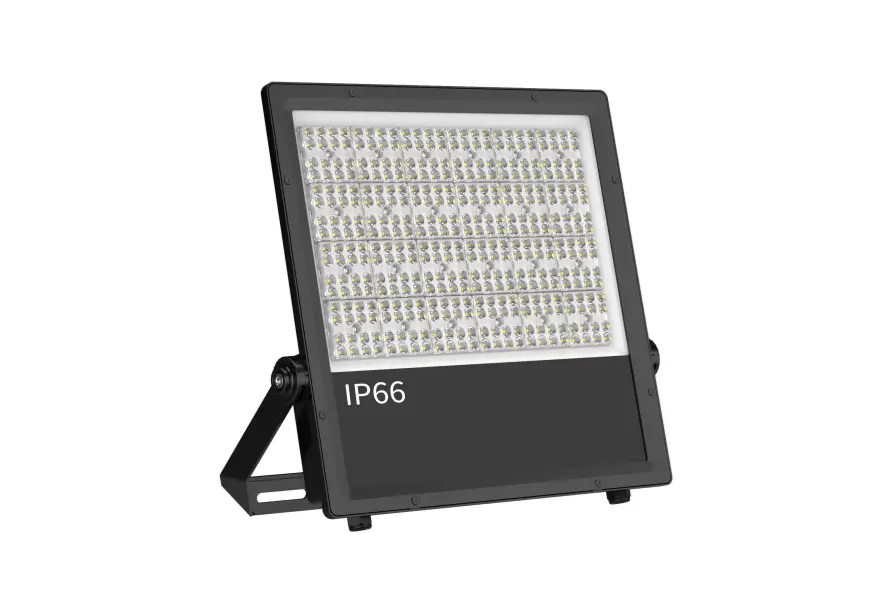

In industrial and commercial LED lighting projects, discussions often begin with lumens, wattage, and IP ratings. Experienced engineers and project managers understand that the real difference usually comes from secondary optics — how light is precisely shaped, directed, and controlled after it leaves the LED chip.
At TUBU, we have spent more than a decade refining optical solutions for high-bay lights, tri-proof lights, floodlights, marine searchlights, and linear industrial fixtures used in warehouses, food processing facilities, factory workshops, and marine environments. Over the years, one principle has remained constant: there is no universally “better” optic — only the one best suited to the mounting height, application requirements, visual comfort targets, and environmental conditions of a specific project.
This article breaks down the engineering realities of LED reflectors versus lenses (including common TIR and hybrid approaches), their trade-offs in beam control, efficiency, glare (UGR), and uniformity.
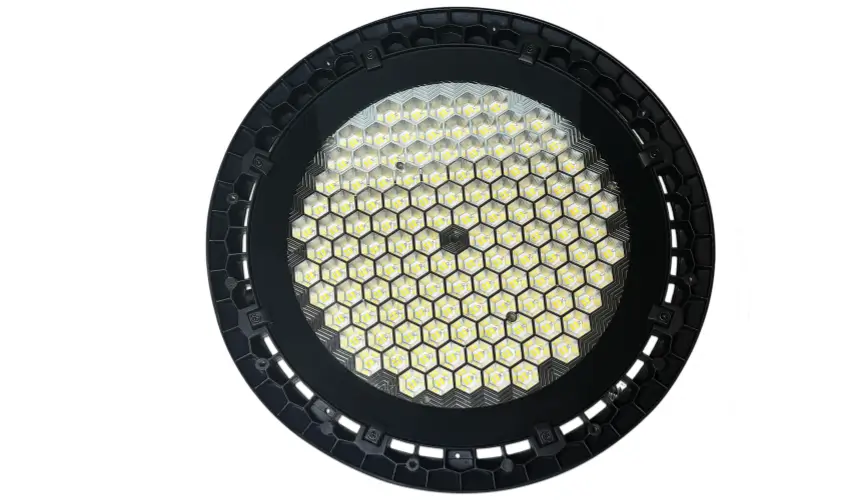
Understanding the Fundamentals: How Reflectors and Lenses Actually Work
LED Reflectors redirect light through reflection, typically using high-reflectance aluminum (specular or diffuse) or engineered plastics. Light rays from the LED hit the reflector surface and bounce toward the target area. This design often allows some central forward light to escape unmanaged, resulting in softer edges and controlled spill.
LED Lenses (refractive optics, commonly made from PMMA, PC, or silicone) bend light as it passes through the material. Total Internal Reflection (TIR) lenses combine refraction and internal reflection for precise beam control. Lenses can capture and redirect a very high percentage of the light, producing sharper cutoffs and more defined beam patterns.
Key Engineering Differences:
- Beam Edge and Transition: Reflectors typically deliver softer, more gradual transitions. Lenses create sharper, well-defined edges. Soft reflector transitions often feel more comfortable in general ambient lighting, while sharp lens cutoffs excel in applications requiring precise aiming or strict light control.
- Optical Efficiency: Well-designed TIR lenses frequently achieve higher system efficiency (often 90%+), particularly in narrow beams. Reflectors commonly reach 70-85% efficiency but perform strongly in wide distributions where capturing light from a broad source is critical.
- Glare Control (UGR): Both technologies can be engineered for excellent glare control, but they achieve it differently. Reflectors can effectively shield the bright LED source in deep-cell or parabolic designs. Lenses provide a precise cutoff to minimize spill into the line of sight. In high-bay applications, proper selection is essential for achieving UGR <19 or even <16 in sensitive environments.
- Size and Fixture Integration: Reflectors often require more depth, while lenses enable more compact fixture designs.
- Durability and Environment: Material choice is critical. UV-stabilized PC or PMMA lenses and coated aluminum reflectors must withstand the high temperatures, chemicals, or high-pressure washdown conditions common in industrial settings.
The optimal choice is always a systems-level engineering decision based on the full application context.
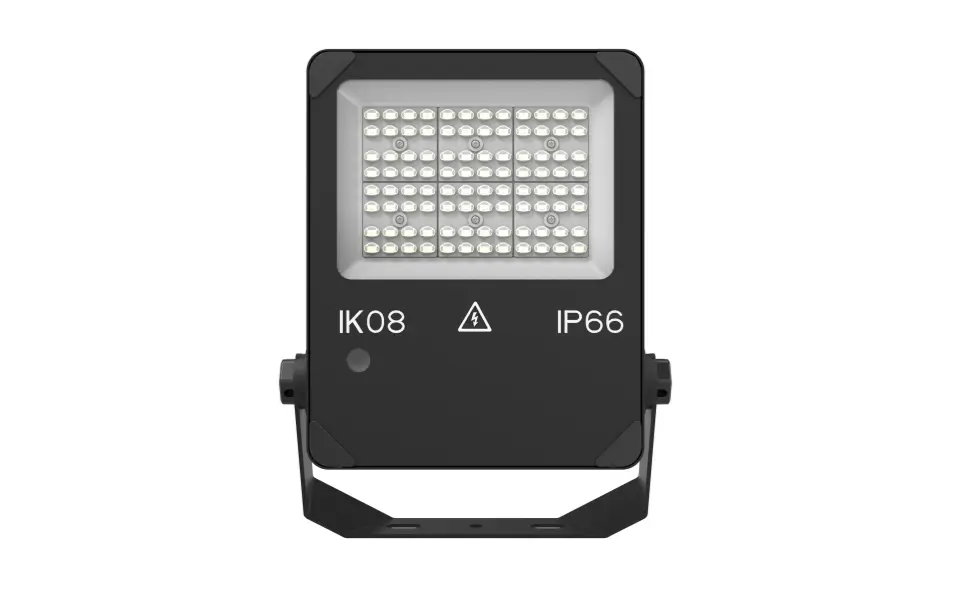
Scene-by-Scene Application Logic
1. High Bay Lighting in Warehouses and Factories
For mounting heights of 8–15m+, a medium-wide beam reflector (often 90–120°) or hybrid lens-reflector system frequently delivers the best overall performance. The softer distribution helps illuminate vertical rack surfaces effectively and reduces harsh shadows while maintaining good uniformity.
In narrow aisles or very high mounting, narrower lens-based optics (60–75°) concentrate intensity at the working plane. However, precise spacing calculations are essential—misapplication can create hot spots, dark zones, and elevated UGR for forklift operators.
TUBU Project Insight: In a 12m warehouse retrofit, moving from wide bare-lens high bays to optimized 90° reflector optics reduced the total number of fixtures by approximately 15% while improving uniformity and lowering perceived glare. The result was measurable energy savings and better working conditions.
2. Linear Low Bay, Tri-Proof, and Batten Fixtures
In corridors, workshops, and food processing facilities, lens-based designs (especially batwing or asymmetric distributions) are often preferred for uniform wall-to-wall illumination without excessive ceiling brightness.
For food-grade environments requiring IP69K high-pressure washdown, robust PC lenses or borosilicate glass paired with stainless steel components provide superior cleanability and longevity compared to many traditional reflector setups. Low-glare UGR<19 versions using specialized lenses or grid structures are standard for inspection areas, offices, and workstations.
3. Flood Lights and Area Lighting (Outdoor, Sports, Marine)
Lenses, particularly advanced TIR or multi-array designs, offer superior long-throw control, sharp cutoffs, and minimal light pollution—making them ideal for marine searchlights, perimeter lighting, and sports applications. Precise beam angles (30°, 60°, Type II/III/IV/V) are more consistently achievable.
Reflectors remain highly effective for broader flood applications where cost-effectiveness and softer wash are priorities.
4. Specialty Applications
- Gas Stations and Canopies: Batwing lens distributions optimize ground coverage while minimizing driver glare.
- Tunnels and Cold Storage: Asymmetric lenses or reflectors engineered for extreme temperatures and specific uniformity requirements.
- Supermarkets and Commercial Spaces: High-CRI, low-UGR hybrid optics enhance merchandise appeal and shopper comfort.
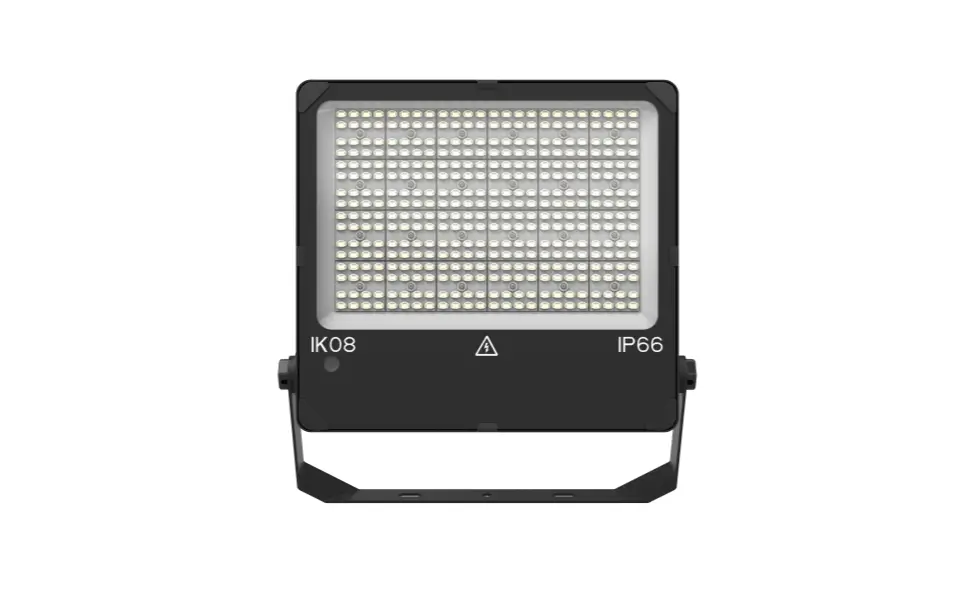
Engineering Selection Framework
When evaluating reflector vs lens options for a project, TUBU’s engineering team considers:
When reviewing options for a project:
- What is the mounting height and spacing? Rule of thumb: narrower beams for higher mounts.
- What tasks occur? Fine inspection needs a lower UGR and higher uniformity than general storage.
- What are the visual comfort requirements? UGR limits, color rendering, and avoidance of direct source view.
- Environmental stressors? Dust, moisture, chemicals, vibration, temperature extremes—optics must survive what the fixture survives. Energy and uniformity targets? Sometimes, a slightly less efficient but better-distributed optic reduces overall power density.
- Maintenance reality? Will the optic stay clean? Is it easily replaceable in modular designs?
Never choose purely on “highest efficiency” or “lowest cost.” We have seen projects where cheap wide-beam fixtures caused glare complaints, leading to expensive retrofits within a year.
Common Pitfalls and Lessons from the Field
- Over-narrowing beams: Creates dark zones between fixtures and increases UGR for upward glances.
- Ignoring secondary light spots: Poor lens design produces rings or artifacts that annoy workers.
- Material mismatch: Cheap PMMA lenses yellow or crack in high-UV or chemical environments.
- Assuming one optic fits all heights: A 120° optic perfect at 6m becomes inefficient and glary at 12m.
Conclusion: Optics as Project Insurance
The real “secret” behind reflector versus lens is that LED optical design bridges raw LED performance and measurable real-world outcomes—task-plane illuminance, visual comfort, energy efficiency, and long-term reliability.
At TUBU, every optical solution begins with detailed application data: mounting heights, lux targets, UGR requirements, and environmental classification. Only then do we recommend or customize the most suitable reflector, lens, or hybrid system.
If you are evaluating high-bay, tri-proof, flood, Marine Searchlight, or lighting solutions for an upcoming project and would like application-specific recommendations or Dialux simulations, TUBU’s engineering team is ready to support your needs with practical, performance-driven solutions.