

Outdoor LED floodlights are exposed to harsh environmental conditions, including rain, dust, temperature fluctuations, vibration, and occasional physical impact, all of which can contribute to equipment failures. Regular and systematic inspection, care, and maintenance can help extend their service life.
This article covers some common LED floodlight problems and their solutions identified by TUBULE.
1. Fading, Discoloration, and Corrosion of the Housing, Lens, or Internal Parts
Common Causes
- Long-term exposure to marine or coastal environments
- Salt spray and high humidity
- Prolonged UV exposure
- Frequent temperature and moisture fluctuations
- Inadequate corrosion protection
Inspection
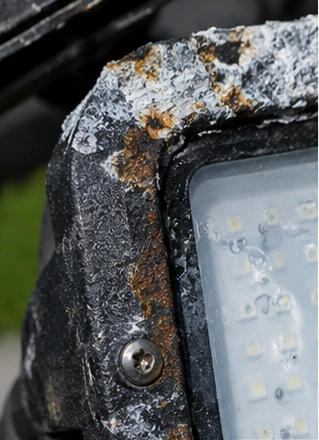
Check the housing, lens, brackets, screws, and exposed metal parts for:
- Fading or discoloration
- Rust
- White corrosion deposits
- Surface pitting
- Peeling or deteriorated protective coatings
Solutions
- Clean the affected surfaces and remove loose corrosion where appropriate.
- Replace severely corroded screws, brackets, or other components.
- For marine or high-corrosion environments, use floodlights with appropriate corrosion protection and materials.
2. Flickering or Unstable Light Output
Common Causes
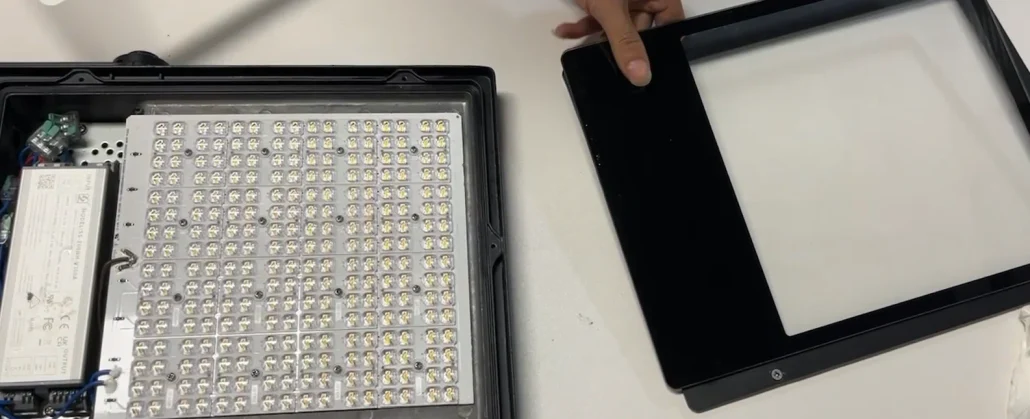
- LED driver degradation or failure
- Unstable input voltage
- Loose electrical connections
- Poor grounding
- Overheating
- Moisture or corrosion affecting electrical components
Inspection
Check:
- Input voltage
- Electrical terminals and connectors
- Grounding connections
- LED driver condition
- Signs of overheating or moisture
- Whether flickering occurs continuously or only after prolonged operation
Solutions
- Tighten loose electrical connections.
- Correct abnormal input voltage or grounding problems.
- Repair or replace a faulty LED driver when confirmed.
- Address overheating or moisture problems before replacing the LED module.
3. Reduced or Sudden Loss of Light Output
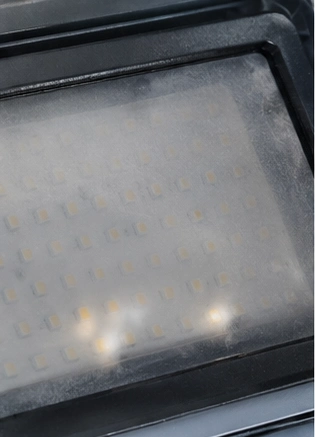
Common Causes
- Normal LED lumen depreciation
- LED module degradation
- Driver deterioration
- Excessive operating temperature
- Optical surface contamination
- Partial LED failure
Inspection
Check:
- Current light output against the fixture’s rated performance
- LED module condition
- Driver condition
- Heat sink cleanliness
- Operating temperature
- Whether dark spots or uneven illumination are present
Lumen depreciation should be assessed against the fixture’s expected performance and application requirements. L70 is commonly used as a lumen-maintenance reference, representing the point at which light output reaches 70% of the initial level. It does not mean the fixture must automatically be replaced at 70%.
Solutions
- Clean contaminated optical surfaces.
- Improve heat dissipation if excessive temperature is identified.
- Replace a faulty driver or LED module where applicable.
- Replace the fixture when its light output can no longer meet the application’s lighting requirements.
4. Condensation, Moisture, or Water Ingress Inside the Fitting
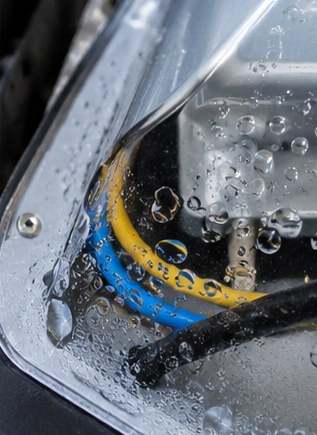
Common Causes
- Large temperature fluctuations
- High humidity
- Aging or damaged seals
- Damaged housing
- Improperly sealed cable entries
- Damaged cable glands
- Blocked drainage holes
- Prolonged exposure to rain or water
Inspection
Check for:
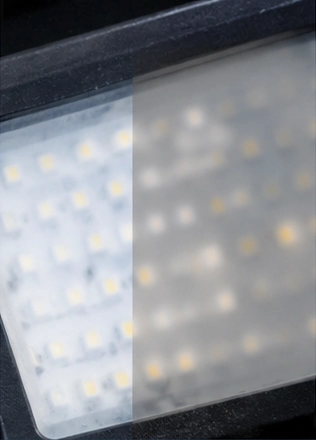
- Fogging inside the lens
- Water droplets
- Persistent condensation
- Water accumulation
- Internal corrosion
- Water marks around seals and cable entries
Temporary condensation caused by temperature differences does not necessarily indicate water ingress. Persistent moisture, water accumulation, corrosion, or repeated electrical problems after rainfall require further inspection.
Solutions
- Clear blocked drainage paths.
- Replace damaged seals or cable glands.
- Repair or replace damaged housing components.
- Check the installation orientation and sealing of cable entries.
- Replace the fixture if water damage has compromised its electrical or protective performance.
5. Overheating and Poor Heat Dissipation
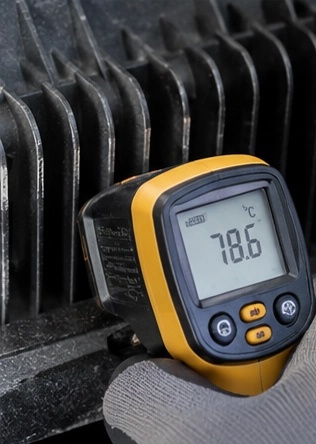
Common Causes
- Dust accumulation on heat sink fins
- Leaves or debris blocking the heat sink
- Restricted airflow
- High ambient temperature
- Insufficient installation clearance
- Poor thermal management
- Driver operating under excessive thermal stress
Inspection
Check:
- Rear heat sink fins for dust, leaves, or debris
- Airflow around the fixture
- Ambient temperature
- LED module or driver case temperature
- Light output after prolonged operation
- Signs of thermal protection or repeated shutdown
There is no universal temperature that defines overheating for every LED floodlight. The measured Tc (case temperature) should be compared with the maximum Tc specified by the manufacturer for the LED module or driver.
For example, if a product specifies a maximum Tc of 90°C, exceeding that value indicates that the component is operating outside its specified thermal limit.
Solutions
- Clean dust, leaves, and debris from the heat sink fins.
- Ensure sufficient clearance around the fixture.
- Improve airflow where installation conditions restrict heat dissipation.
- Check whether the fixture is suitable for the ambient temperature.
- Replace components that have been damaged by excessive thermal stress.
6. Blocked Drainage and Water-Management Problems
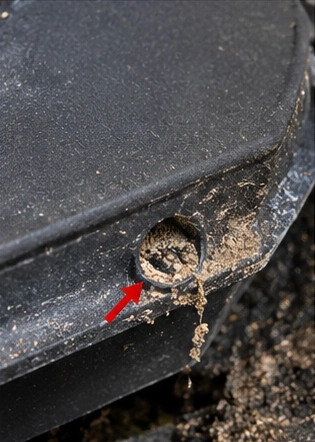
Common Causes
- Dust and dirt accumulation
- Leaves and organic debris
- Mud
- Salt deposits
- Incorrect installation orientation
- Poor drainage design
Inspection
Check:
- Drainage holes for visible blockage
- Water accumulation inside or around the housing
- Water marks or corrosion
- Whether water can drain freely
- Whether the fixture is installed in the recommended orientation
Solutions
- Remove dirt, leaves, mud, or other debris blocking the drainage holes.
- Keep drainage paths clear during routine maintenance.
- Correct the installation orientation where necessary.
- Replace damaged components if water accumulation has affected the fixture.
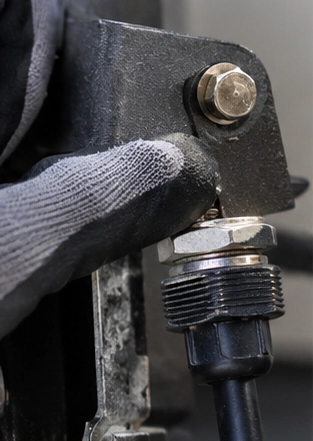
7. Loose or Damaged Mounting Brackets and Cable Entries
Common Causes
- Long-term vibration
- Wind loading
- Thermal expansion and contraction
- Corrosion
- Improper installation
- Physical impact
- Aging of mechanical components
Inspection
Check:
- Mounting screws
- Brackets
- Washers and fasteners
- Cable glands
- Cable entry seals
- Signs of movement or misalignment
Solutions
- Tighten loose mounting screws and fasteners.
- Replace damaged brackets or mounting hardware.
- Replace damaged cable glands or sealing components.
- Re-secure the fixture if its position or aiming has changed.
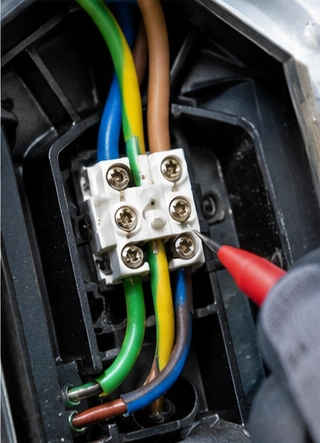
8. Grounding and Electrical Connection Problems
Common Causes
- Loose terminals
- Damaged wiring
- Poor grounding
- Corroded connectors
- Moisture intrusion
- Improper installation
- Voltage fluctuations
Inspection
Check:
- Grounding conductor and connection
- Electrical terminals and connectors
- Cables for damage or deterioration
- Signs of corrosion or overheating
- Input voltage against the fixture’s rated range
Solutions
- Restore secure grounding connections.
- Tighten loose terminals and connectors.
- Replace damaged cables or electrical components.
- Correct abnormal input voltage where necessary.
- Have persistent electrical faults inspected by a qualified professional.
Conclusion
Regular inspection and maintenance can help identify LED floodlight problems early, reduce unexpected failures, and extend the service life of the lighting system. From corrosion and overheating to water ingress, electrical issues, and light output degradation, identifying the underlying cause is essential for choosing the right solution.
Have a problem with your LED floodlights? Contact TUBULE, and our team will help you identify the cause and provide a suitable solution for your project as quickly as possible.