
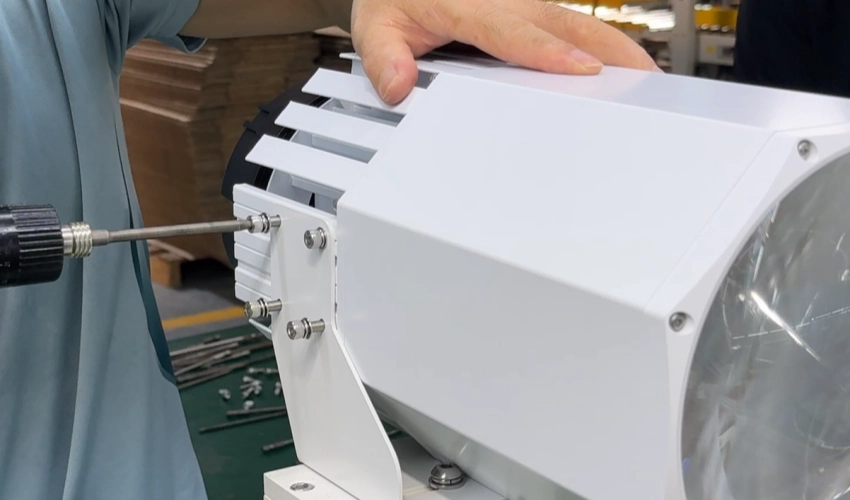

LED searchlights are professional lighting devices designed for long-distance illumination and target searching, suitable for a wide range of applications, including marine, land-based, and aviation environments. TUBU LED searchlights integrate long-distance illumination, pan-tilt positioning, and remote control to support remote, directional lighting in demanding environments.
To ensure stable operation and the expected lighting performance of a searchlight, proper installation, operation, and routine maintenance are essential. This guide covers key considerations for LED searchlight installation, operation, and maintenance, helping users deploy equipment, operate it daily, and troubleshoot issues.
Check the Installation Site Before Installing an LED Searchlight
Before mounting the searchlight, check the site for mechanical, electrical, and environmental requirements.
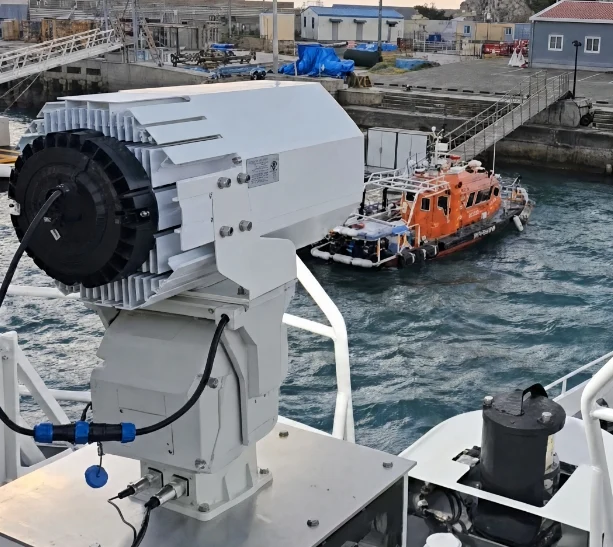
Installation checklist
- Mounting surface: Use a rigid and stable platform or bracket. Keep the base as level as practical.
- Rotation clearance: Make sure nearby structures do not interfere with horizontal or vertical movement.
- Power supply: Verify the required input voltage and power capacity before connection.
- Cable routing: Plan separate routes for power and communication cables where practical.
- Communication wiring: Use shielded twisted-pair cable for the communication connection.
- Interference control: Keep communication cables away from high-voltage or other strong interference sources.
- Weather exposure: Consider moisture, dust, smoke, heat, and other site conditions.
- Lightning protection: Provide appropriate protection as part of the installation.
A clear rotation path and stable mounting platform are particularly important for motorized searchlights because mechanical movement is part of normal operation.
How to Mount an LED Searchlight and Pan-Tilt Unit
The searchlight and pan-tilt assembly should be secured before electrical testing.
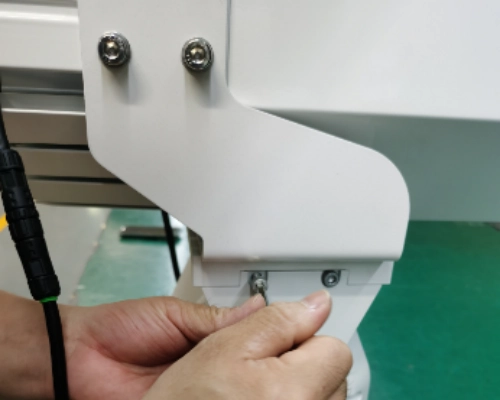
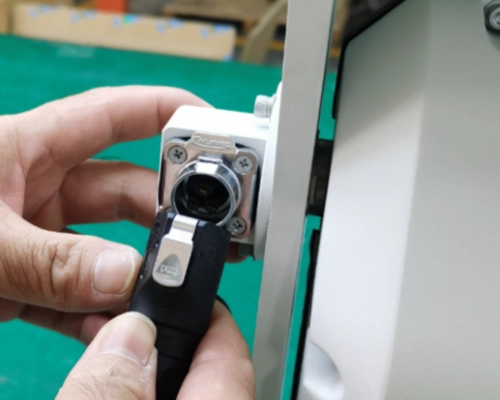
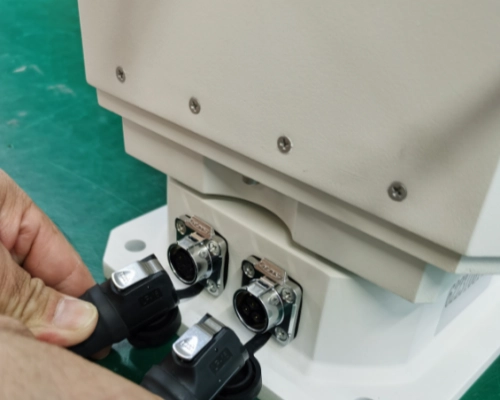
Basic mounting sequence
- Secure the pan-tilt base firmly to the mounting platform.
- Keep the base level as much as possible.
- Align the searchlight with the pan-tilt mounting interface.
- Secure the light using the supplied mounting hardware.
- Connect the searchlight to the pan-tilt assembly with the correct connector orientation.
- Check that all mounting points are secure.
- Move the pan-tilt unit through its intended range and confirm that nothing blocks its movement.
Do not power the complete assembly before the pan-tilt base is firmly secured. A loose mounting structure can affect positioning and may damage the equipment during movement.
Connect the LED Searchlight to the Controller
Power and communication connections should be completed with the system switched off.
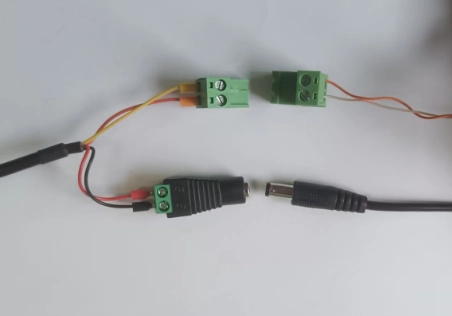
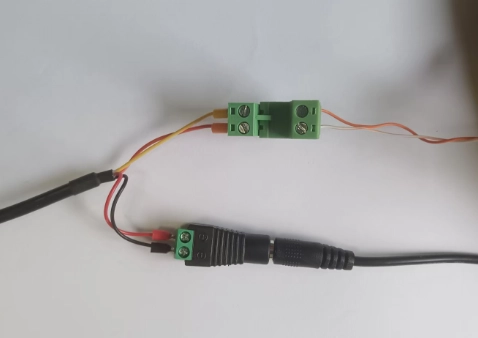
Connection points to check
- Connect the searchlight and controller through the specified communication interface.
- Connect the controller to its required power supply.
- Connect the searchlight to the appropriate mains supply.
- Match each wire or terminal according to its designated function.
- Check connector orientation before locking each connection.
- Insulate exposed wiring before power-up.
- Keep communication cables away from high-voltage wiring where possible.
After the connections are complete, power on the system and allow the searchlight to complete its automatic startup self-check. Normal control can begin after the self-check finishes.
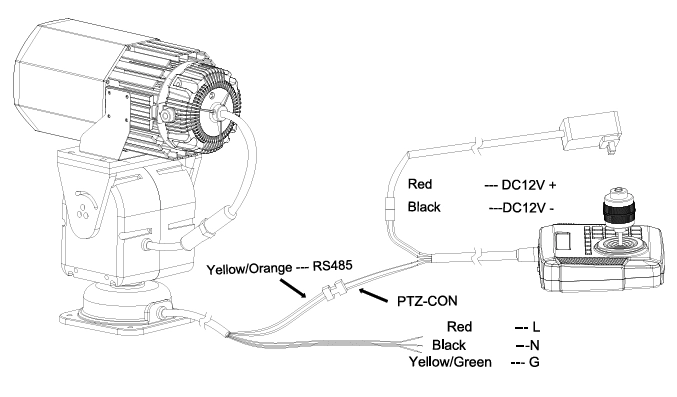
How to Operate an LED Searchlight Controller
Most routine operations can be handled directly from the controller.
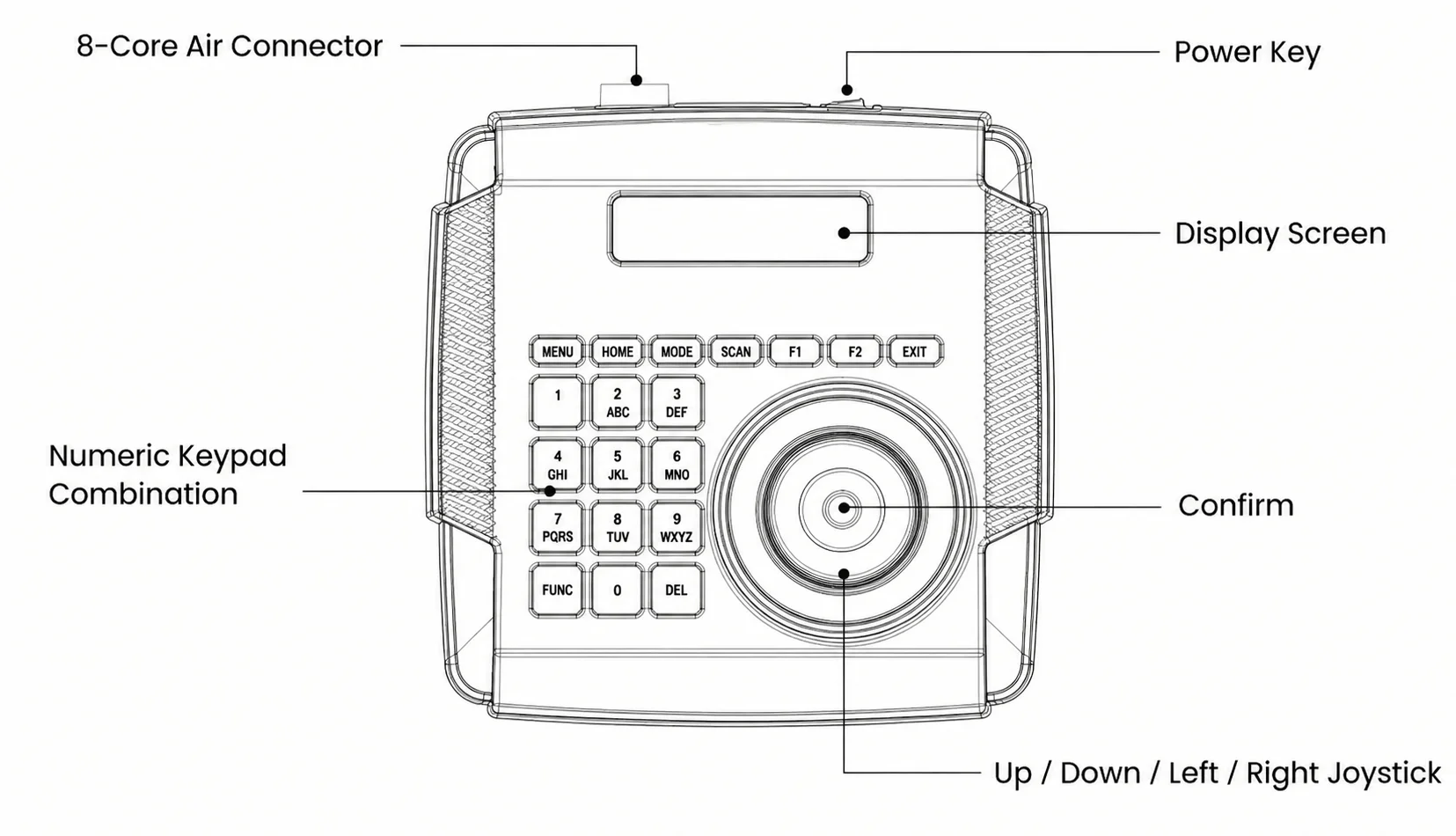
Main controls
- Light ON/OFF: Switch the searchlight on or off.
- Pan/Tilt: Use the joystick to move the searchlight horizontally and vertically.
- Movement speed: Select the required pan-tilt speed level.
- Preset positions: Save frequently used positions and recall them when needed.
- Beam adjustment: On models with zoom control, adjust the beam size from the controller.
Preset positions are useful when the searchlight regularly needs to illuminate or monitor the same areas. They reduce repeated manual positioning and provide more consistent operation.
Communication Settings and Parameters
Communication settings must match between the searchlight and the connected controller or control software.
Key settings
- Communication interface: RS485
- Control protocol: Pelco-D; Pelco-P may also be supported depending on configuration
- Baud rate: 2400 bps by default, with 4800, 9600, and 19200 bps available
- Device address: Configured according to the control system
In a multi-device system, each unit should have the correct address so that commands are sent to the intended device.
Before changing communication parameters, record the existing settings. A mismatch in address, protocol, or baud rate can leave the searchlight powered and operational while preventing controller commands from being recognized.
LED Searchlight Troubleshooting
A systematic check is usually more effective than immediately replacing components.
| Symptom | Possible Cause | What to Check |
| No startup self-check | Power or wiring problem | Power supply, connectors, input wiring |
| Abnormal self-check | Insufficient power or mechanical issue | Power capacity, pan-tilt mechanism |
| Self-check works but no pan/tilt control | Communication problem | Signal wiring, address, protocol, baud rate |
| Pan/tilt works but light stays off | Power or light-source problem | Wiring, power supply, LED light source |
| Intermittent operation | Loose or damaged connection | Terminals, connectors, cables |
Start with the simplest checks—power and wiring—before moving to communication settings or mechanical inspection.
LED Searchlight Maintenance and Safety Precautions
Routine inspection helps maintain reliable operation, particularly for equipment installed outdoors or in demanding environments.
Maintenance checklist
- Inspect mounting hardware for looseness.
- Check power and communication cables for damage.
- Inspect connectors for poor contact or other visible problems.
- Make sure the pan-tilt movement remains unobstructed.
- Keep the housing and sealing areas clean.
- Check for signs of water ingress or corrosion.
- Stop operation if abnormal smoke or odor is detected.
- Disconnect power before connecting or removing wiring.
- Do not open the housing for unauthorized repair.
- Avoid organic solvents that may affect the enclosure sealing.
For long-term reliability, focus on the parts that directly affect operation: mounting stability, electrical connections, communication, mechanical movement, and enclosure condition.
Conclusion: Reliable LED Searchlight Installation and Operation
Reliable LED searchlight performance starts with a stable installation, correct electrical and communication connections, matched control settings, and regular maintenance. A structured approach to setup and troubleshooting helps keep pan-tilt positioning and illumination operating consistently in demanding applications.
If you are looking for a reliable LED searchlight or have any technical questions about LED searchlights, feel free to contact TUBU. We provide professional searchlight solutions and will respond to your inquiry within 24 hours.