
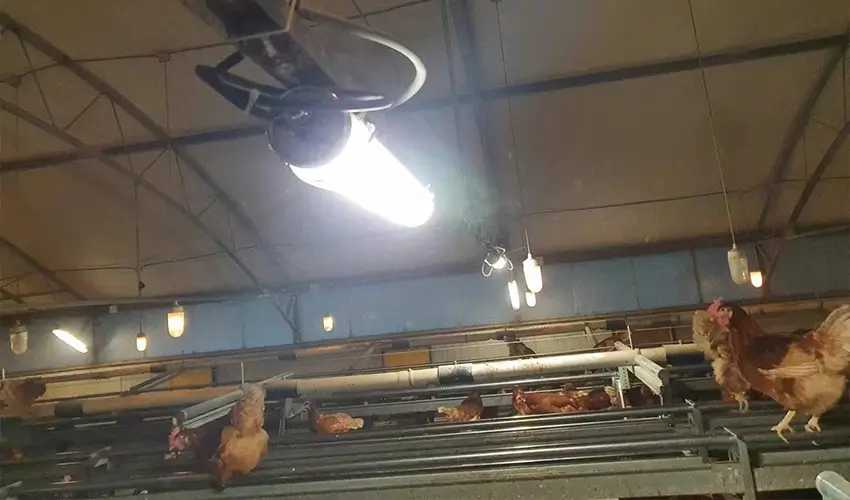

In modern agriculture, farms are increasingly adopting smarter, more scientific equipment setups to reduce operating costs and improve production efficiency.
Lighting systems are one of the key factors in this process. Poor lighting design not only leads to unnecessary energy consumption but can also disrupt animals’ biological rhythms, affecting critical performance indicators such as milk yield and egg production. More importantly, these effects often accumulate over time and are directly reflected in both cost and output.
That’s why choosing the right lighting is a critical decision. Read this article for a practical guide to selecting the right LED lighting solutions.
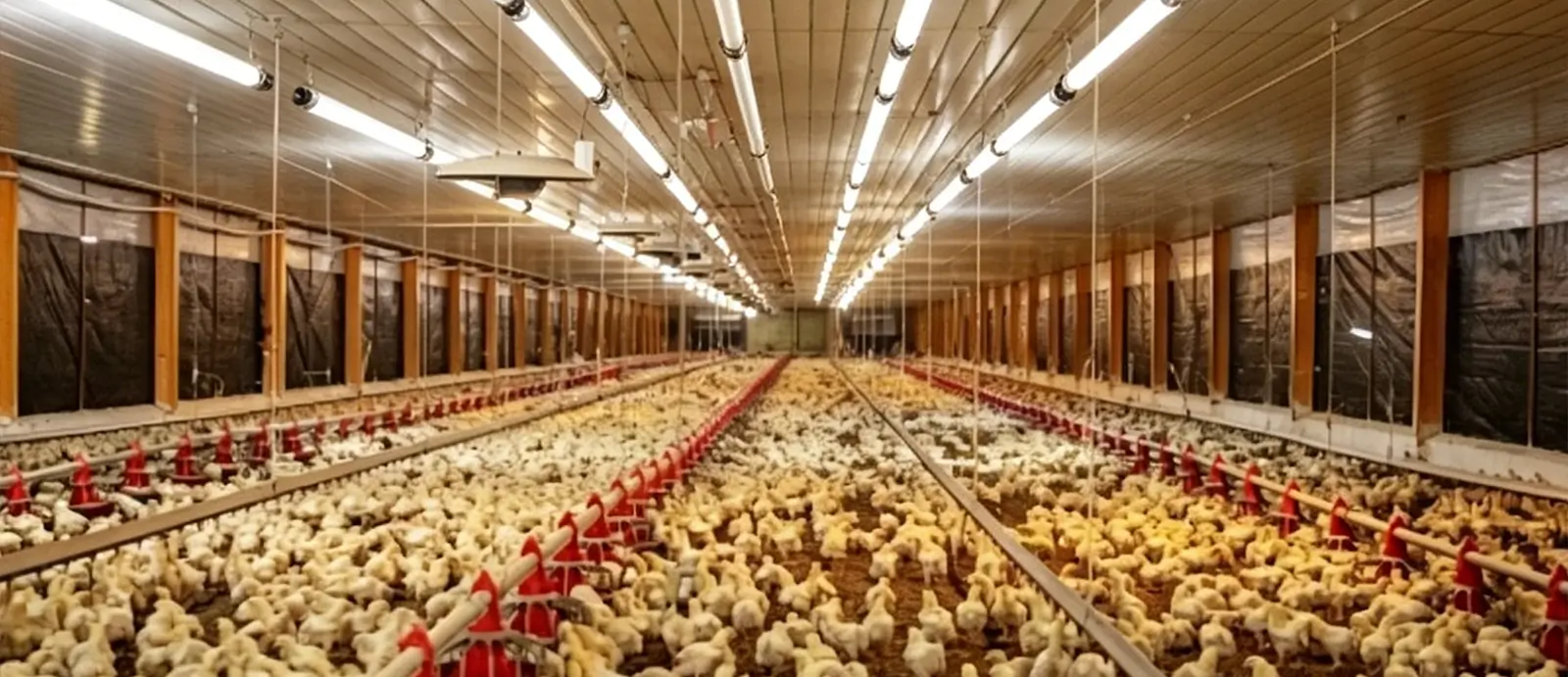
Why Lighting Matters in Farmyards
In livestock farming, lighting is essentially a tool for regulating biological rhythms, directly influencing animal behavior and production performance.
Farm lighting systems are high-duty-cycle equipment (typically operating 12–18 hours per day). Their cost is not only driven by energy consumption, but also by their ability to withstand harsh conditions such as humidity, dust, and corrosion—making them a key factor in overall operational costs.
Impact on Animals:
✓ Poultry: Light duration and intensity directly affect sexual maturity and egg-laying cycles
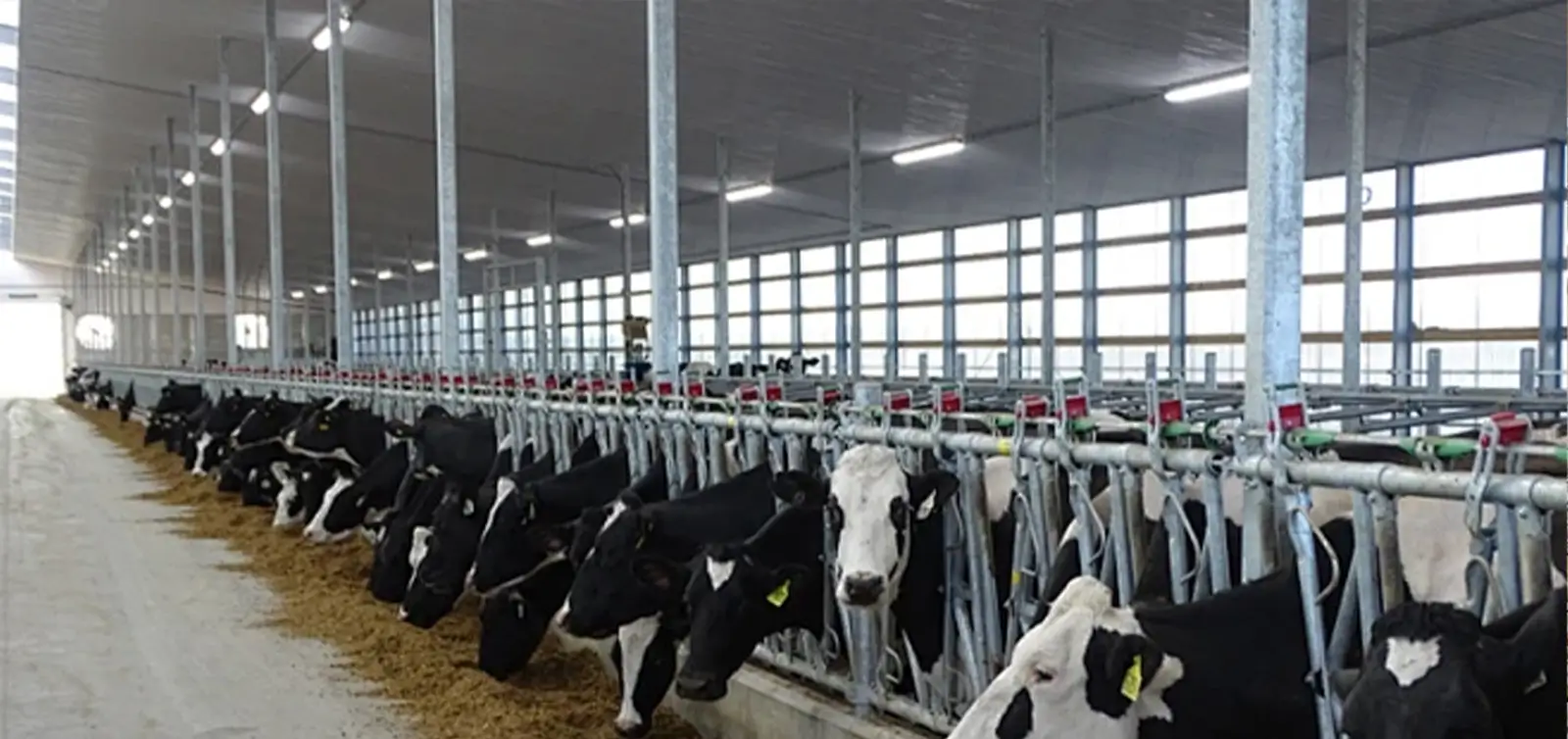
✓ Dairy cows: Consistent long-day lighting (e.g., 16 hours) supports milk yield and feed intake
✓ Pigs: Lighting conditions influence activity patterns and stress levels
Impact on Farm Environment:
✓ Insufficient protection rating: Inadequate IP rating can lead to water ingress and lighting failure
✓ Poor corrosion resistance: Housing degradation and seal failure reduce fixture lifespan
✓ Improper structural design: Dust accumulation and difficult cleaning affect both lighting performance and hygiene
Impact on Operating Costs:
✓ Long operating hours: Continuous use leads to significant energy consumption
✓ Low efficacy: Higher power required to achieve the same illumination level increases electricity costs
✓ Lack of control systems: Inability to adjust lighting levels and schedules leads to energy waste
✓ Frequent maintenance: Short lifespan or high failure rates increase labor and replacement costs
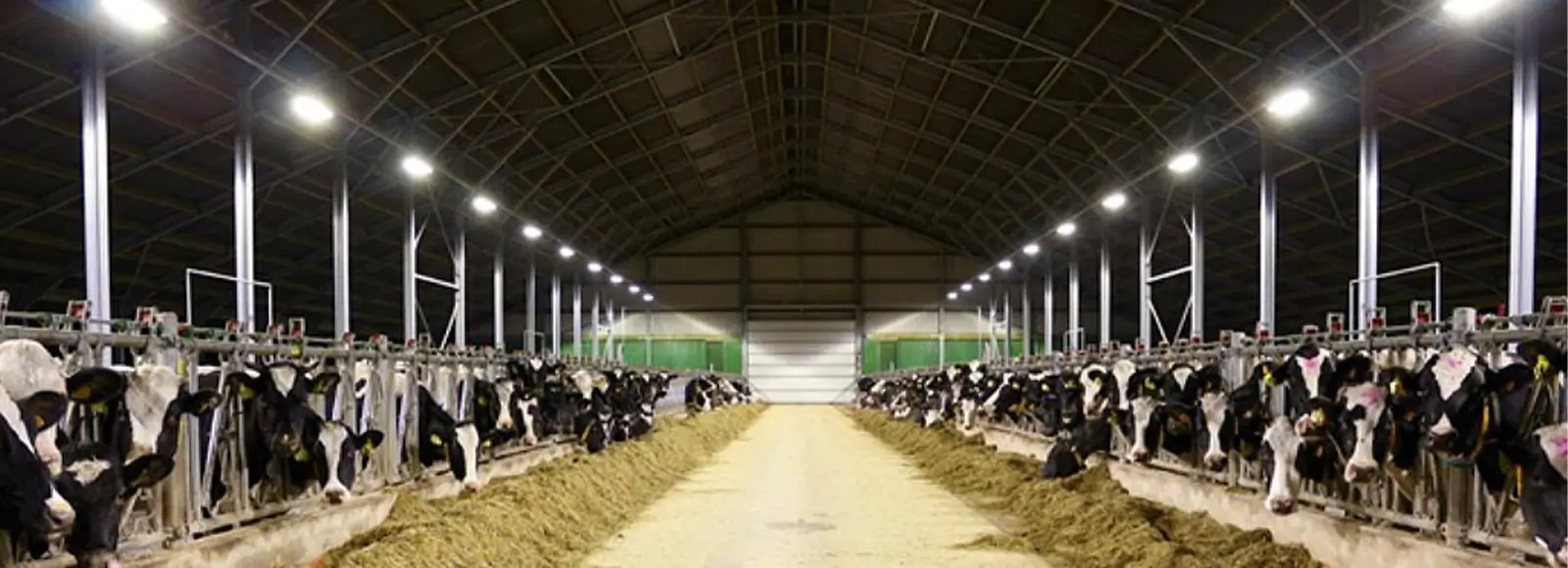
Types of Farm Lighting
LED Tri-proof Lights
LED tri-proof lights are designed for harsh environments, featuring a highly sealed structure with strong protection performance. They offer long lifespan, dimming capability, and low maintenance requirements. The adjustable lighting control allows better adaptation to the needs of different animal growth stages.
Fluorescent Lighting
Fluorescent lighting systems have relatively low initial investment and provide fairly uniform light distribution, making them suitable for basic illumination needs.
Incandescent Lighting
Incandescent lamps feature a simple structure, low cost, and high color rendering. They provide warm light similar to natural light and have minimal electrical requirements.
High-Pressure Sodium (HPS) Lighting
High-pressure sodium lamps are commonly used in large-area or high-ceiling applications. They offer wide coverage per fixture, relatively high efficacy, and strong light penetration.
Key Factors When Choosing LED Lighting
LED tri-proof lights have become a mature and widely adopted solution in agricultural lighting. They offer consistent long-term performance in terms of energy efficiency, lifespan, and environmental adaptability, making them a standard choice in modern farm projects.
Key advantages include:
✓ Higher efficacy (e.g., ≥130 lm/W), reducing power consumption at the same illumination level
✓ High protection ratings (IP66 and above, up to IP69K), suitable for wet and washdown environments
✓ Corrosion-resistant materials designed for ammonia-rich conditions common in livestock farms
✓ Support for stable lighting cycles (timer-based control)
✓ Dimmable options to match different growth stages
✓ Availability of specific light spectra (e.g., red light)
✓ Reliable drivers with low failure rates, minimizing maintenance requirements
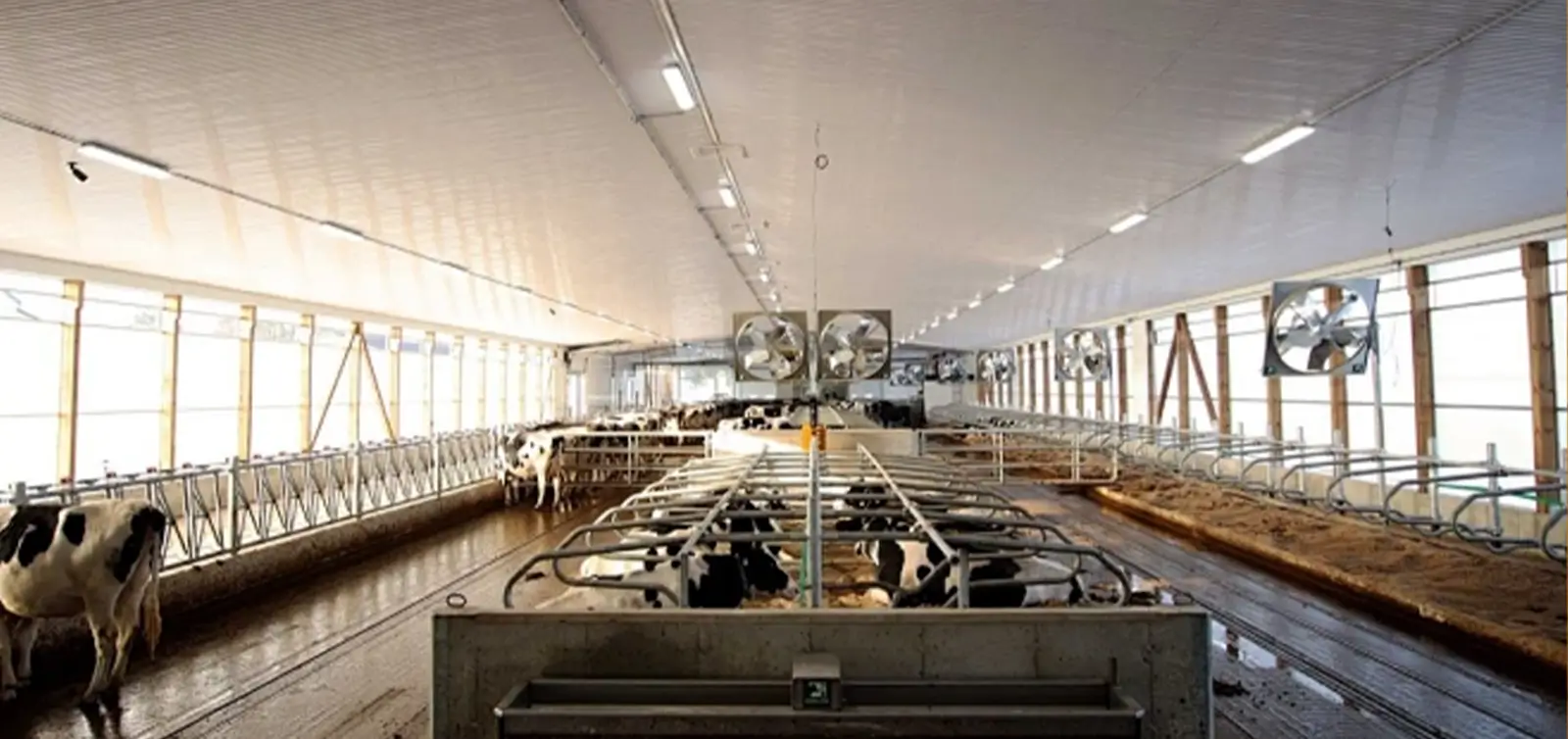
Recommended Solutions by Farm Type
1. Livestock Farms
In livestock farming, the core lighting requirements are stability, visual comfort, and low-stress illumination, helping reduce animal stress responses and improve growth performance.
Lighting Requirements:
- Stable and long-duration lighting operation
- No flicker and low glare to avoid animal agitation
- High humidity and ammonia-rich environments require strong corrosion resistance
- Higher illumination levels in specific areas (e.g., milking parlors)
- IP66 or higher protection rating, suitable for high-pressure washdown cleaning
To meet these requirements, we recommend the TUBU Ø100mm LED Tubular Light L9P.
This solution provides warm white or natural white lighting in livestock environments, helping meet animals’ physiological needs and supporting a stable and healthy growth cycle.
Key Advantages:
- IP67 & IP69K & IK10 protection rating
- PMMA IK08 / PC IK10 impact resistance options
- System efficiency up to 140 lm/W / 160 lm/W (up to 170 lm/W customizable)
- Withstands water pressure up to 100 bar (1450 psi) and temperatures up to 880°C
- Environmentally friendly: no mercury, no UV, no IR
- High CRI >80
- 5-year warranty
- Wide beam angle: 120°
- Instant start with 100% luminous flux
- Certifications: CE, RoHS compliant
- Supports surface mounting or suspension installation1
2. Poultry Farms
Poultry is highly sensitive to light. Lighting not only influences their activity levels but also directly affects growth rate, egg production, and daily behavioral rhythms.
Lighting Requirements:
- Precise control of lighting duration (photoperiod management)
- High sensitivity to the light spectrum (red and warm light play a specific role)
- Adjustable light intensity across different growth stages (brooding vs. growing periods)
- Large-scale dense farming requires high uniformity of illumination
- To meet these requirements, we recommend the TUBU L9 Red & White LED Tubular Light.
This solution combines a red-and-white spectrum design with dimming control, allowing lighting conditions to be adapted to the different growth stages of poultry. It helps stabilize biological rhythms and egg-laying rates.
Key Features:
- IP67 & IP69K protection rating
- PMMA IK08 / PC IK10 impact resistance options
- Anti-ammonia corrosion resistance
- Withstands water pressure up to 100 bar (1450 psi) and temperatures up to 80°C
- Environmentally friendly: no mercury, no UV, no IR
- Wide beam angle: 120°
- Instant start with 100% luminous flux
- 5-year warranty
- Certifications: CE, RoHS compliant
- Supports surface mounting or suspended installation
Common Farm Lighting Problems
1. Why do farm lighting systems suddenly stop working?
Farm lighting failures usually indicate the fixture has exceeded its environmental limits.
High humidity, ammonia, and frequent high-pressure washdowns break down the sealing system over time. Once moisture reaches the driver compartment, electrical instability or short circuits occur. Corrosive gases further accelerate seal degradation.
In these environments, IP67 or IP69K-rated luminaires are required.
2. Key Parameters for Farm Lighting Selection
- Ingress Protection: IP67 / IP69K
- Impact Resistance: IK10
- Luminous Efficacy: ≥130 lm/W
- Beam Angle: ≥120°
- Dimming & Zoning Capability: Required
- Ammonia Resistance & Corrosion Protection: Required