
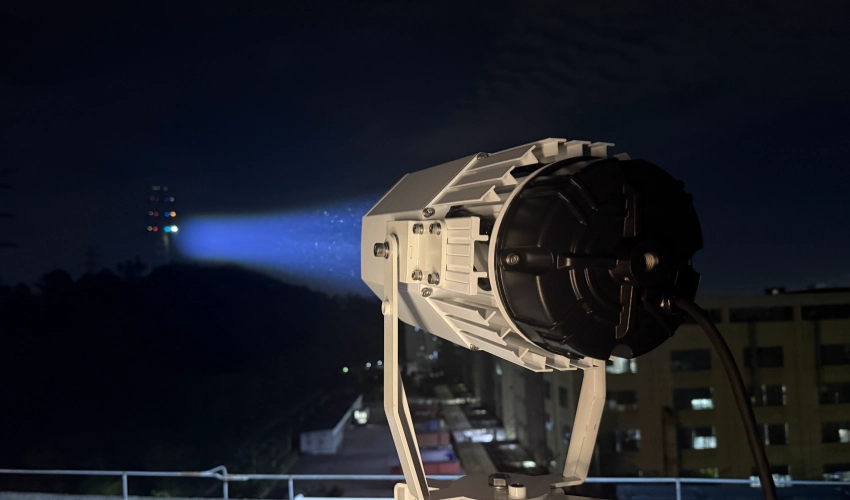

LED marine searchlights (also known as marine LED searchlights or sweep lights) are high-intensity, long-range illumination systems designed specifically for demanding maritime environments. These specialized lights deliver powerful, focused beams for navigation, search and rescue, security, and operational tasks at sea.
Unlike general-purpose marine LED lighting, searchlights prioritize extreme beam distance, narrow beam angles, and robust construction to withstand harsh ocean conditions. Modern LED versions have largely replaced traditional halogen or xenon models due to superior efficiency, reliability, and lower operating costs.
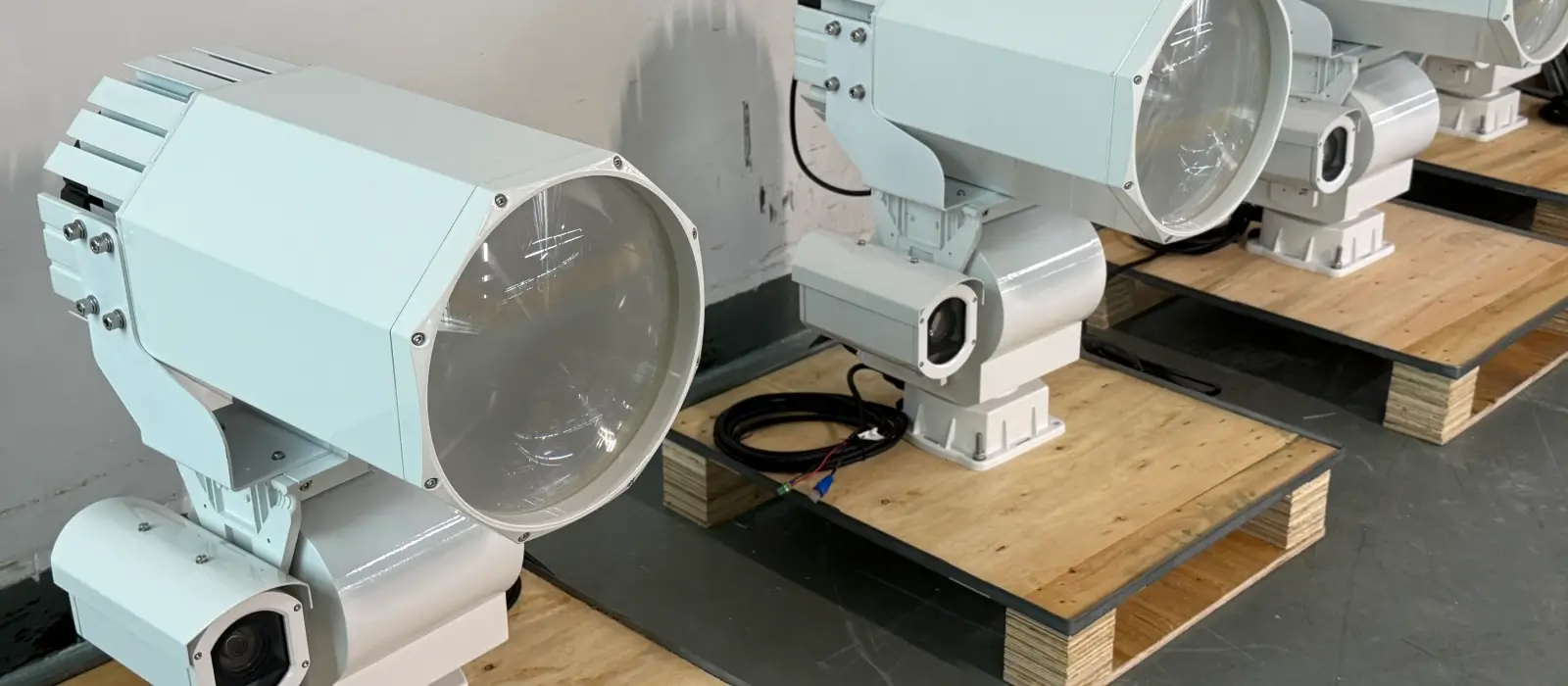
What Is an LED Marine Searchlight?
An LED marine searchlight is a directional lighting fixture that produces a concentrated, high-lumen beam capable of illuminating targets at distances ranging from hundreds of meters to several kilometers. It combines advanced LED light sources, precision optics (such as multi-lens or reflector systems), and marine-grade housings.
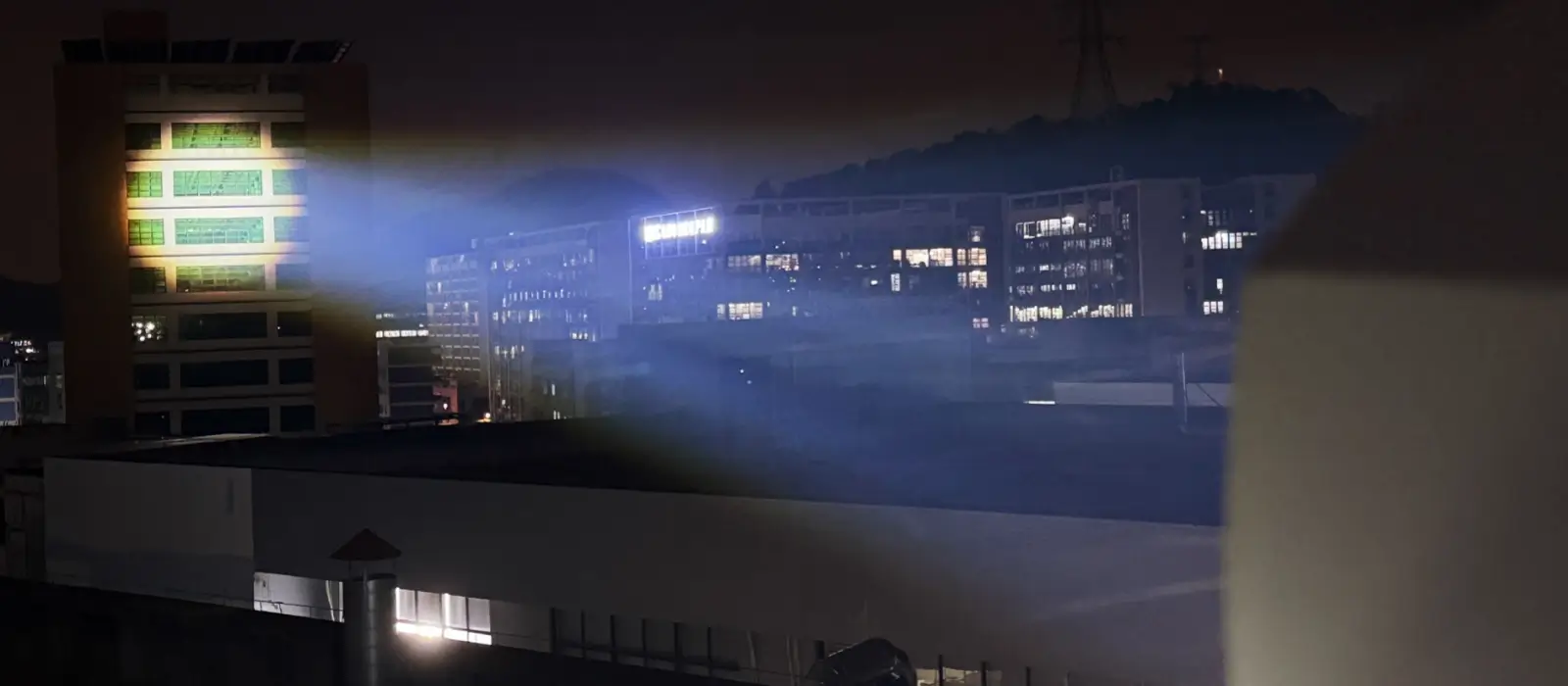
Working principle: High-power LED modules (often single high-output modules of 250W–450W or more) generate light that is collimated through specialized lenses or reflectors into narrow beam angles (typically 1°–8°). This creates intense central intensity (measured in candela) for long-range projection while minimizing light spill.
Key differences from standard marine floodlights:
- Beam characteristics: Searchlights use tight, long-throw beams; floodlights provide wide-area illumination.
- Power and distance focus: Designed for spotlighting distant objects rather than broad coverage.
- Marine-specific engineering: Enhanced corrosion resistance, vibration-proofing, and waterproofing tailored for saltwater exposure.
These features make LED searchlights ideal for dynamic maritime operations where precise, far-reaching visibility is critical.
Where Are LED Marine Searchlights Used?
LED marine searchlights serve diverse applications across the maritime sector:
- Commercial vessels — Cargo ships, tankers, and bulk carriers use them for collision avoidance, mooring, and night navigation.
- Workboats and tugs — Essential for towing operations, close-quarters maneuvering, and hazard identification.
- Fishing vessels — Aid in locating fish schools, net deployment, and deck operations during night fishing.
- Patrol and law enforcement boats — Support search and rescue (SAR), border security, and pursuit scenarios.
- Offshore platforms and wind farms — Provide perimeter lighting, helideck illumination, and maintenance support.
- Ports and harbors — Assist with vessel berthing, cargo handling, and security patrols.
- Search & rescue and military — Critical for emergency response and defense operations.
In each case, reliable long-range illumination directly impacts safety, operational efficiency, and regulatory compliance.
Key Features of LED Marine Searchlights
High-quality marine LED searchlights incorporate features engineered for real-world performance:
- Long-range capability — Models can achieve 1–3 km effective illumination (at 1 lux), with high central beam intensity (e.g., millions of candela).
- Precision optics — Narrow beam angles (as low as 1–4°) with excellent penetration through fog, rain, or sea spray.
- Durability — IP66/IP67 or higher ratings, 316L stainless steel housings, and salt-spray resistant coatings for corrosion protection.
- Reliability — Instant on/off (no warm-up), vibration-resistant design, natural convection cooling (fanless in many models), and lifespans exceeding 30,000–50,000 hours.
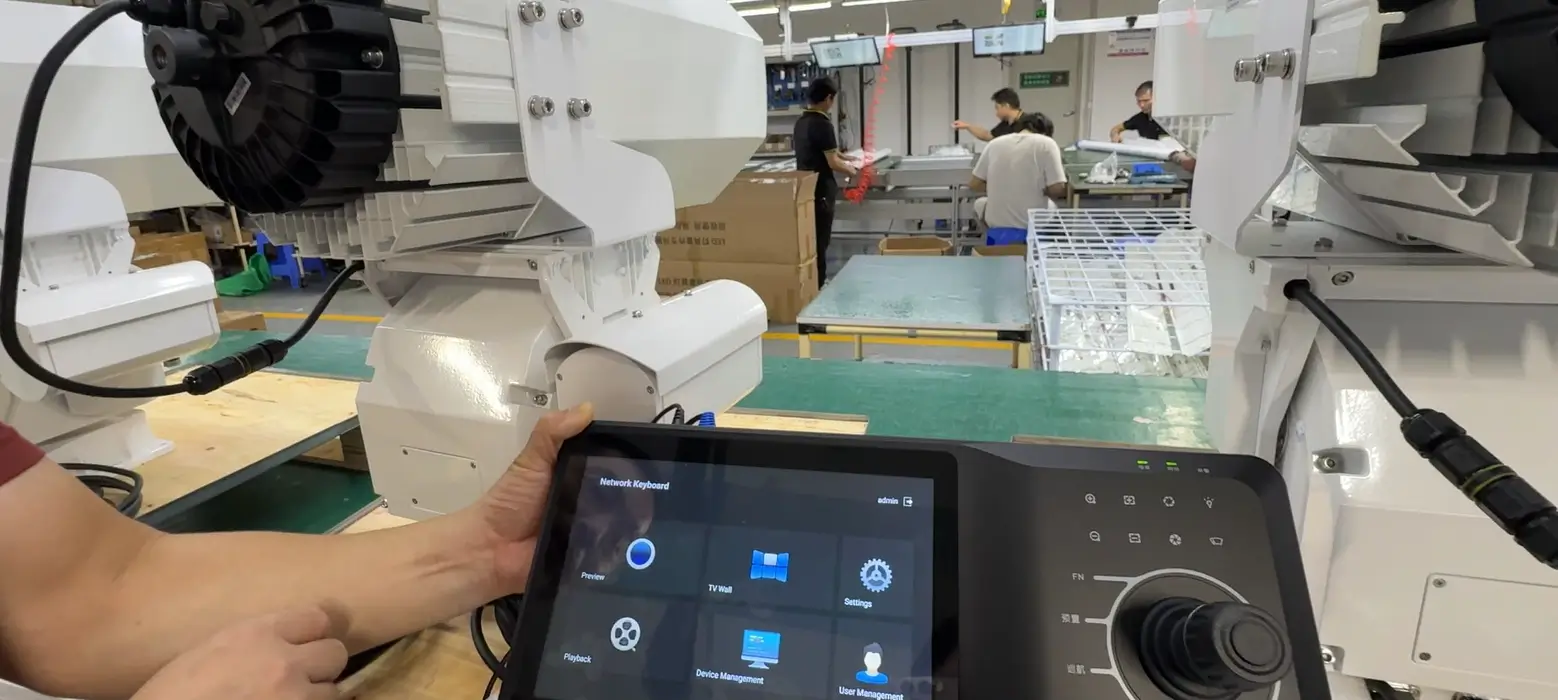
- Control options — Remote network control, radar integration, joystick, or app-based systems for precise positioning.
These attributes translate to fewer failures, lower maintenance, and enhanced operational uptime in critical marine environments.
LED Marine Searchlight vs Traditional Halogen or Xenon Searchlights
Feature | LED Searchlight | Halogen/Xenon | Advantage of LED |
Power Consumption | 160–600W typical | 1000–5000W+ | 50–75% lower energy use |
Lifespan | 30,000–50,000+ hours | 600–1,200 hours | 25–80x longer |
Beam Distance | Excellent (up to 3km+) | Good, but degrades quickly | Superior consistency |
Warm-up Time | Instant | 30+ seconds | Immediate operation |
Maintenance | Minimal | Frequent bulb/replacement | Dramatically reduced |
Heat Generation | Low | High | Safer, less cooling needed |
Reliability in Marine Conditions | High (sealed, corrosion-resistant) | Lower (filament vulnerability) | Better uptime |
The shift to LED is driven by total cost of ownership savings, regulatory pressure for energy efficiency, and the need for reliable performance in 24/7 operations.
How to Choose the Right Marine LED Searchlight
Consider these key factors during selection:
- Power and Range — Match wattage and beam distance to vessel size and operational needs.
- Beam Angle — Narrower angles (1–4°) for maximum distance; slightly wider for broader search patterns.
- Mounting and Control — Fixed, pan-tilt (with intelligent PTZ options), or integration with radar/thermal systems.
- Environmental Ratings — Prioritize IP66+, IK ratings, and marine-grade materials like 316L stainless steel for saltwater environments.
- Voltage and Certifications — Ensure compatibility with vessel electrical systems and compliance with relevant standards (e.g., CE, marine approvals).
- Additional Features — Remote control, network integration, or linkage with other onboard systems.
Work with experienced manufacturers who offer Dialux simulations, custom configurations, and technical support for optimal integration.
Why More Marine Projects Are Switching to LED Searchlights
Stringent maritime energy regulations, rising fuel costs, and demands for reduced downtime are accelerating adoption. LED systems deliver faster ROI through energy savings, near-zero maintenance, and enhanced safety. Their reliability in extreme conditions supports compliance with international standards and improves overall vessel performance.
Conclusion
LED marine searchlights represent a significant advancement in maritime illumination, combining exceptional range, efficiency, and durability. For shipyards, vessel operators, port authorities, and offshore contractors, selecting the right solution enhances safety, reduces costs, and supports modern operational demands.
If you are evaluating options for a new build, retrofit, or fleet upgrade, our team provides technical consultation, custom OEM/ODM solutions, and project-specific recommendations backed by real-world testing and marine expertise. Contact us today for detailed specifications, lighting simulations, or a tailored quotation.
FAQ
1. What is the difference between a marine searchlight and a floodlight?
Searchlights provide narrow, long-distance focused beams for spotting distant objects. Floodlights deliver wide-area illumination for general deck or work lighting.
2. How far can an LED marine searchlight illuminate?
High-performance models reach 1–3 km at 1 lux, depending on power, optics, and conditions.
3. Are LED marine searchlights waterproof?
Yes — quality units achieve IP66/IP67 or higher, withstanding heavy seas and high-pressure washing.
4. Can LED marine searchlights resist saltwater corrosion?
Premium models use 316L stainless steel and specialized coatings, offering excellent long-term resistance in marine atmospheres.
5. How long do LED marine searchlights last?
Typically 30,000–50,000 hours or more, with minimal degradation compared to traditional sources.