
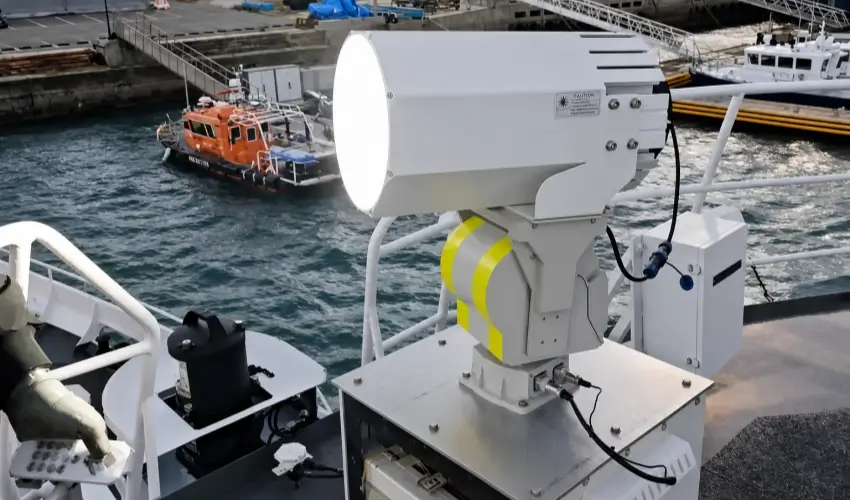

Vessel automation systems rely on compatible communication interfaces to integrate navigation, lighting, and monitoring equipment seamlessly. For marine searchlights, mismatched port specifications often lead to unbudgeted adapter costs, extended installation timelines, and added points of failure in onboard control architectures.
Understanding standard port configurations and available customization options helps engineering teams select equipment that aligns with existing vessel infrastructure without unnecessary overhead.
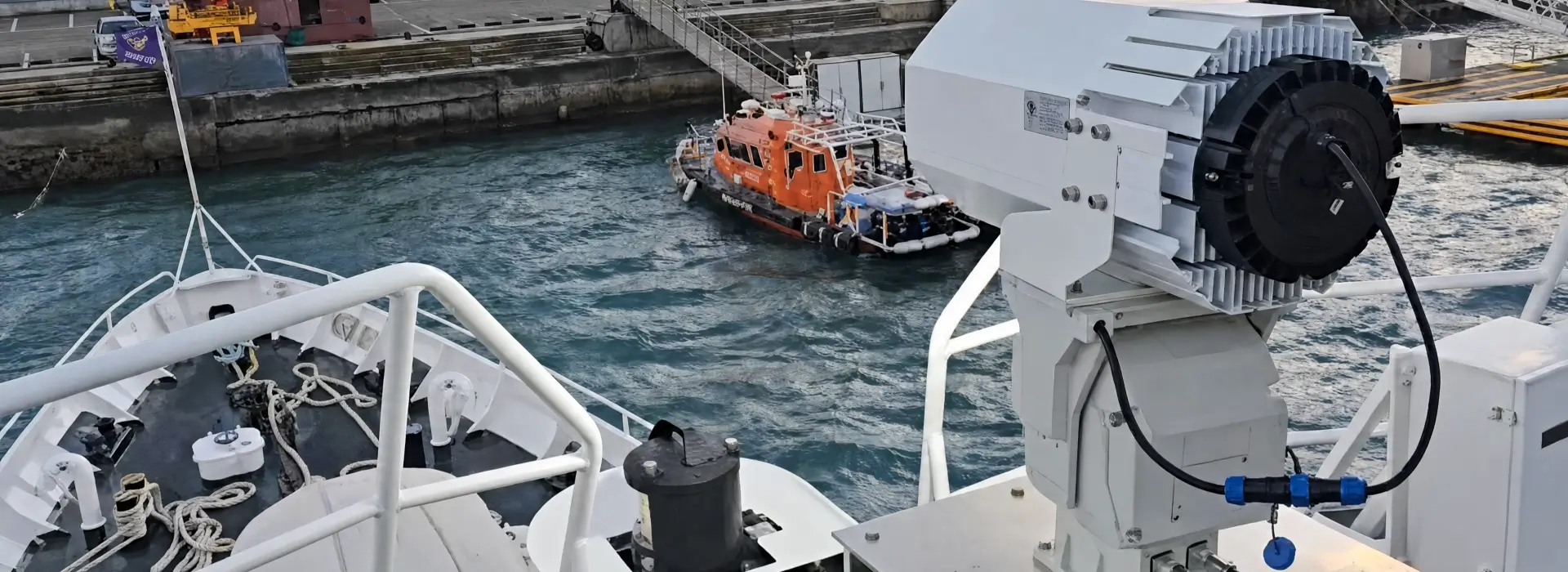
Standard Port Configurations for Mainstream Marine Searchlights
In many marine and industrial applications, RS485 is commonly provided as the standard communication interface, while RS232 or Ethernet-based communication may require additional configuration. When the required interface is not available directly from the equipment, integrators may need to install third-party converters or communication modules, adding hardware costs and increasing system complexity.
Customization costs and lead times can also vary between suppliers. In contrast, our marine searchlights can be configured with RS232 communication upon request at no additional cost.
Standard Port Setup of TUBU Marine Searchlights
TUBU marine searchlights with motorized pan-tilt bases feature RS485 as the standard communication interface, fully aligned with prevailing industry architectures and compatible with most conventional vessel control systems.
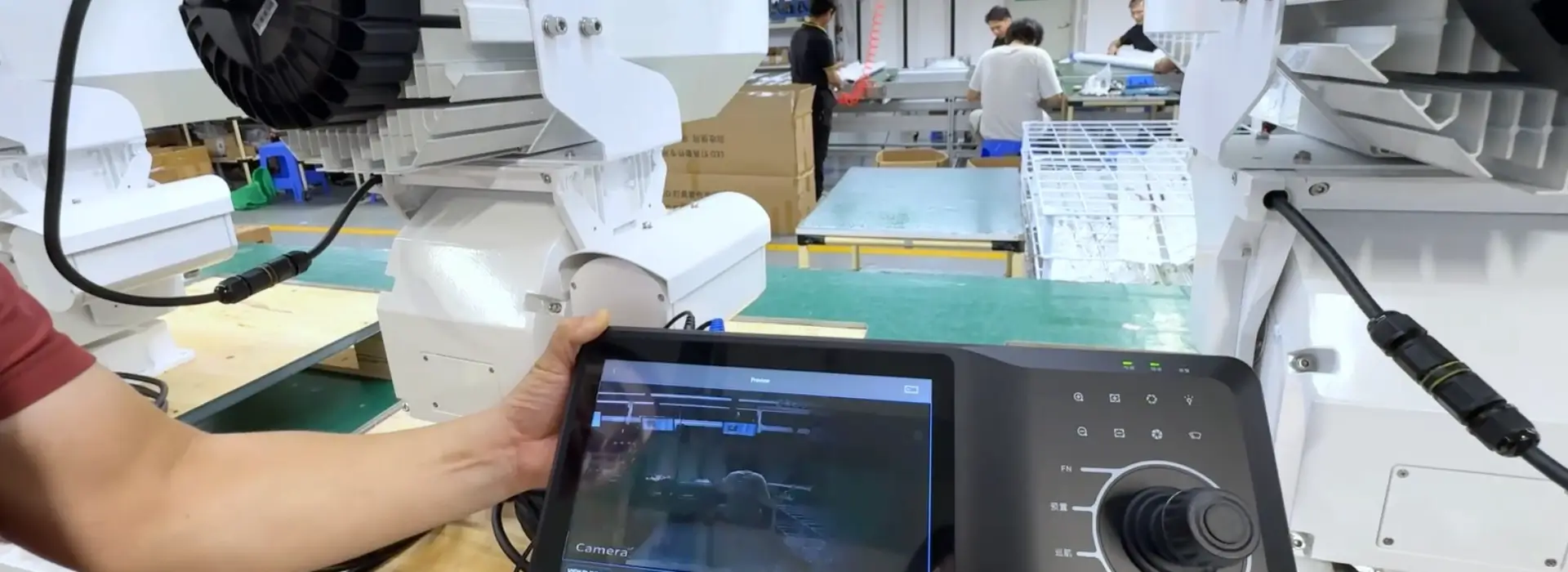
Custom Communication Solutions From TUBU
Beyond standard port configurations, TUBU’s engineering team evaluates each project’s existing system architecture to recommend the most suitable communication setup. For specialized requirements such as IP network integration and multi-device centralized management, the team provides targeted configuration guidance and custom solution support to match specific vessel operational needs.
Recommended Marine Searchlight Communication Solutions
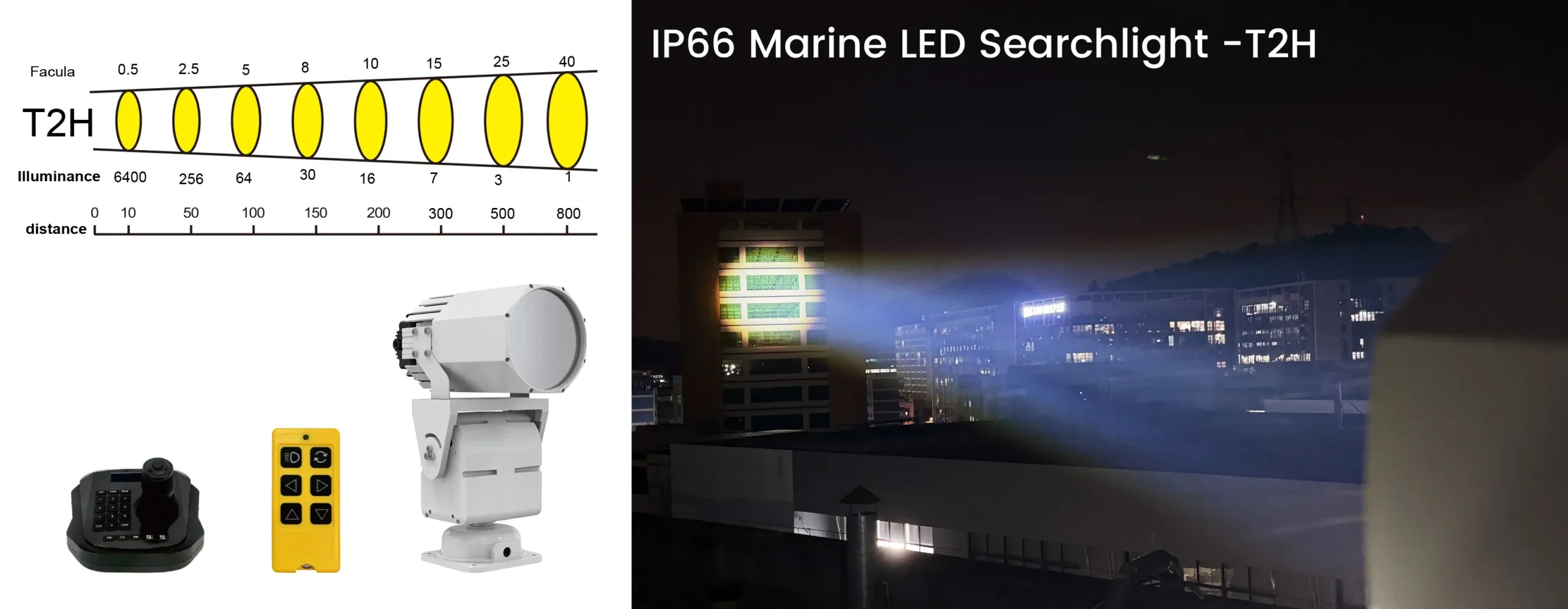
T2 Series Marine Searchlights
Designed for standard maritime lighting and pan-tilt control scenarios, the T2 series adopts RS485 as its factory-standard interface, plug-and-play with most mainstream vessel monitoring systems. For fleets running legacy control platforms, the series supports no-cost RS232 customization, eliminating the need for external signal converters and simplifying on-site deployment.
For more information, see: Marine LED searchlight T2 Series
Camera-Integrated T3 Series Searchlights
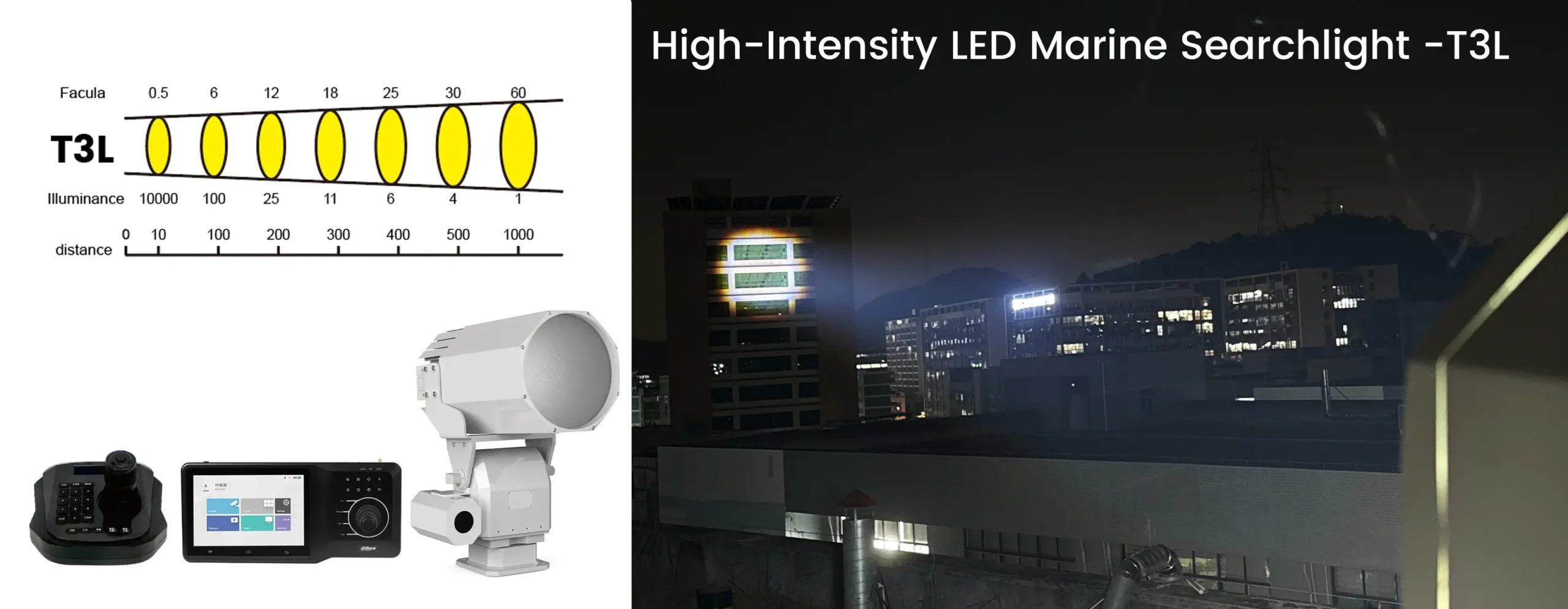
Built for scenarios requiring visual monitoring alongside long-range illumination, the camera-integrated T3 series includes RS485, RS422, and LAN interfaces as standard. It supports industry protocols including ONVIF and GB/T28181, enabling direct integration with shipborne IP surveillance networks and centralized vessel management systems. This multi-interface design supports both traditional serial control and modern networked deployment, making it suitable for high-specification marine and offshore projects.
For more information, see: LED Marine Searchlights with Surveillance Camera T3 Series
Conclusion: Customizable Ports for Seamless Marine Searchlight Integration
TUBU marine searchlights deliver RS485 as standard with no-cost RS232 customization and multi-interface options for camera-integrated models, providing flexible, project-aligned communication setups that adapt to existing vessel systems.