
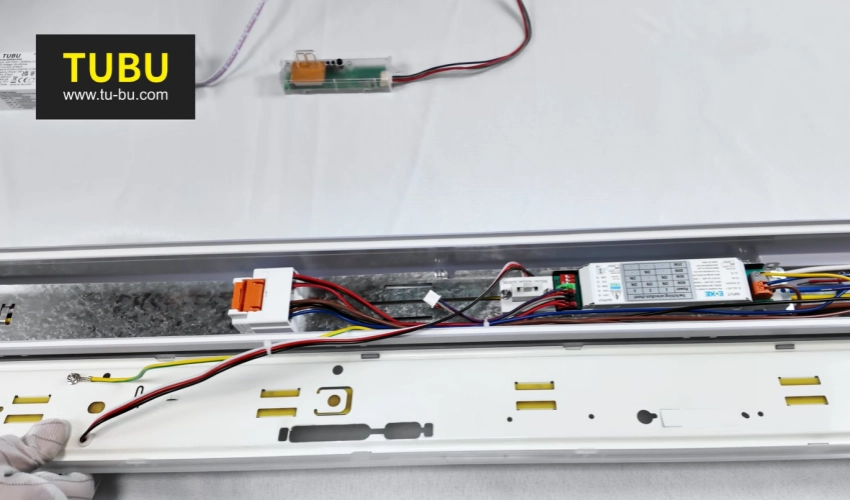

For tri-proof LED lights used in harsh environments, LED driver design matters just as much. One key decision is whether to use an isolated or non-isolated driver.
The difference lies in whether electrical isolation is provided between the input and output circuits, directly affecting electrical safety design, circuit complexity, and overall efficiency. Understanding these differences helps manufacturers and buyers select the right driver configuration for long-term, reliable luminaire operation.
Why Driver Selection Shapes LED Reliability
LED drivers don't just convert AC to DC. In sealed tri-proof fixtures and floodlights, the driver determines how the luminaire handles input fluctuations, line transients, and long-term thermal stress. Buyers tend to compare wattage and lumens and move on. But the driver is the most common field failure point in industrial lighting—it deserves a lot more attention than it usually gets.
A reliable driver selection really comes down to two questions: is the driver isolated or non-isolated, and what input voltage range does the site need? These choices affect safety, compatibility, and service life, often before the LED package itself becomes the limiting factor.
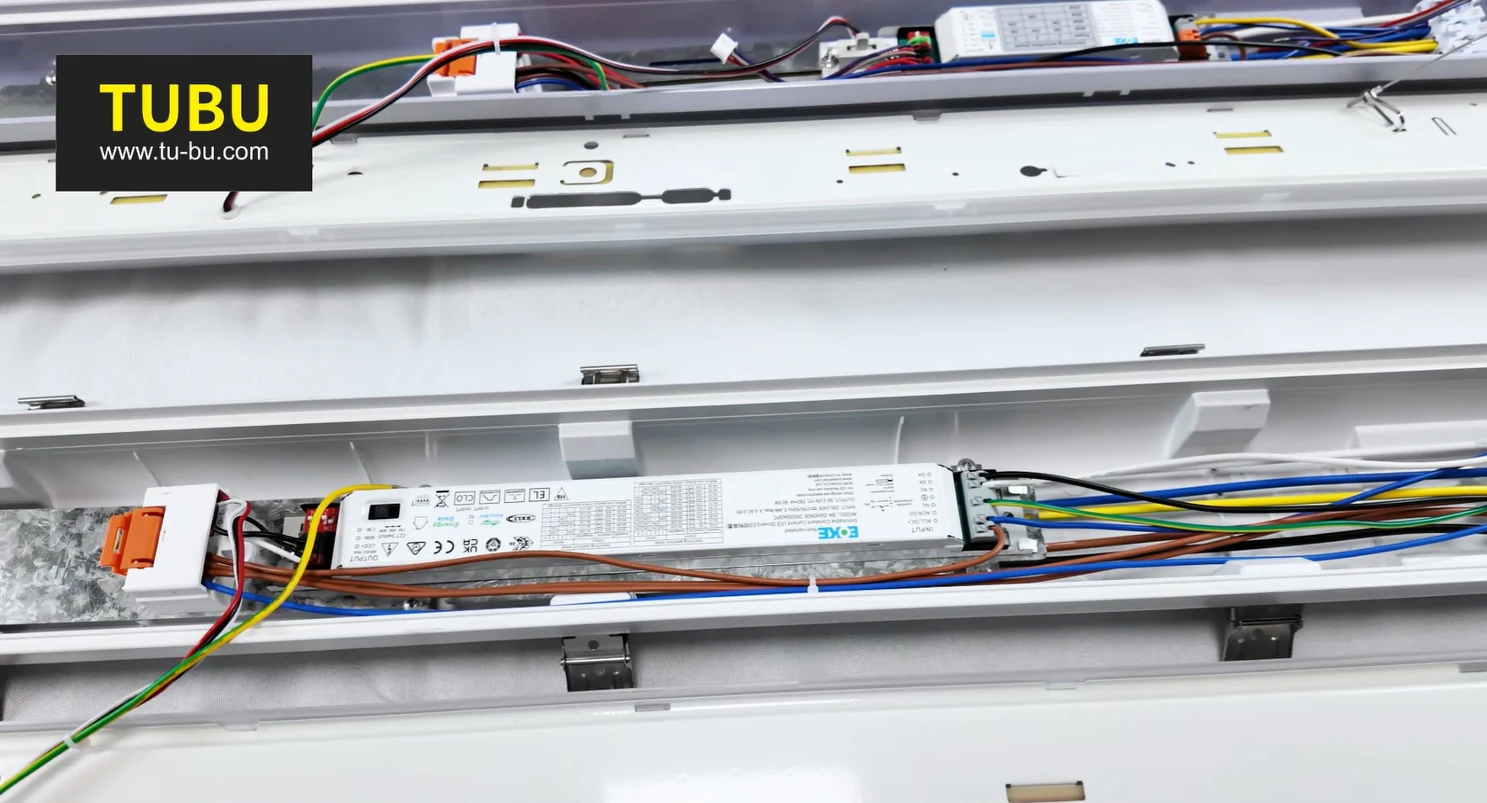
Isolated vs. Non-Isolated Driver Topology
An isolated driver uses a transformer to separate the AC input side from the DC output side. That separation reduces the chance of a high-voltage line transient reaching the LED board, and it can simplify grounding in metal or wet locations.
A non-isolated driver, on the other hand, drops the transformer. The output then shares a reference with the input. Non-isolated designs tend to be smaller and cheaper, but they need stronger internal insulation and sit more exposed to line-side surges.
For tri-proof lights and flood lights mounted on steel structures or exposed to moisture, isolation is usually the safer baseline. In plastic or fully sealed fixtures with stable mains, a non-isolated driver can still work. But you'll want to review the fixture's insulation system case by case.
Surge Protection and Wide Voltage Range
Surge protection is a separate requirement from isolation. It defines how much transient energy the driver can absorb before the output gets damaged. That matters on generator-fed sites, long cable runs, and lightning-exposed installations. Wide input voltage range is just as practical—it. It lets one fixture family work across different site supplies without extra SKUs.
The TUBU manual LED marine searchlight is a good example: its input is listed as 100-277V 50/60Hz / 200-240V 50/60Hz. That range means buyers don't need to specify a different driver for every regional voltage. A driver with a narrow input window can fail—or at least need replacing—when site voltage drifts outside its tolerance.

Specifying Drivers for Tri-Proof and Flood Applications
When you're writing a spec, put the driver topology, surge withstand rating, input voltage range, and operating temperature range down as separate line items. A high IP rating doesn't guarantee driver protection. Verify that the driver itself is sealed or otherwise protected against condensation and thermal cycling.
The same TUBU manual LED marine searchlight carries an IP66 rating and operates from -40°C to +55°C. Those fixture-level ratings only tell you so much—the driver has to be selected to match. For tri-proof and flood light projects, ask for a test report or datasheet instead of accepting a generic "isolated driver" statement.
FAQ
Q: Is an isolated LED driver always better than a non-isolated driver?
A: Not always. Isolated drivers improve input-output separation and are generally safer for metal or wet locations. But non-isolated drivers can be smaller and cost less. The right call depends on fixture insulation, site voltage stability, and surge exposure.
Q: Does isolation protect the LED module from surges?
A: Not always. Isolated drivers improve input-output separation and are generally safer for metal or wet locations. But non-isolated drivers can be smaller and cost less. The right call depends on fixture insulation, site voltage stability, and surge exposure.
Q: What input voltage range should I specify for tri-proof lights?
A: Pick a range that matches the site supply and equipment tolerance. Something like 100-277V 50/60Hz works well for multi-region projects because you don't need a different driver for every voltage.
Q: Can I use the TUBU manual LED marine searchlight as a floodlight reference?
A: The TUBU manual LED marine searchlight includes a flood-type model (TBSL-T2L-160E-C) with an 8° beam angle and a 1 Lux beam distance of at least 300m. Its input voltage is 100-277V 50/60Hz / 200-240V 50/60Hz, which makes it a practical reference for wide-voltage outdoor flood lighting specs.