
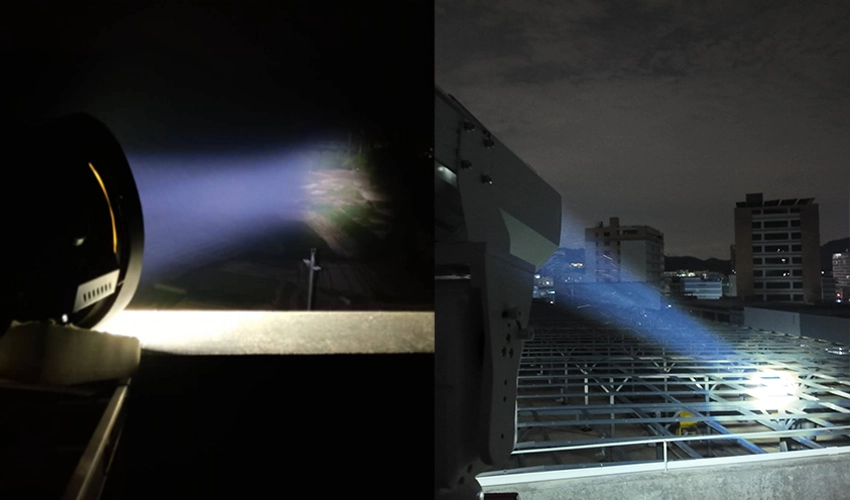

In high-stakes industrial, marine, and infrastructure projects, searchlight performance directly impacts operational safety, efficiency, and costs. Engineers and procurement teams evaluating searchlight light sources must weigh beam distance, illuminance, energy use, lifetime, and total cost of ownership (TCO).
While halogen, xenon (HID), and LED technologies each have roles, understanding their technical differences is essential for mission-critical applications like marine navigation, border security, airport runway illumination, and offshore platforms.

What Really Determines Searchlight Performance?
Searchlight effectiveness hinges on three core metrics:
- Beam Distance — How far the light effectively reaches (often measured at 1 lux or 0.25 lux).
- Illuminance (Lux) — Light intensity at a given distance.
- Coverage Area — The illuminated spot size at range.
Lumens alone do not determine distance. A high-lumen source with poor optics underperforms a well-focused lower-lumen one. Key factors include luminous efficacy (lm/W), beam divergence, reflector or lens efficiency, and the light source's inherent characteristics.
Modern industrial searchlights and marine searchlights increasingly favor advanced optical designs paired with reliable sources to optimize these metrics while minimizing maintenance in harsh environments.
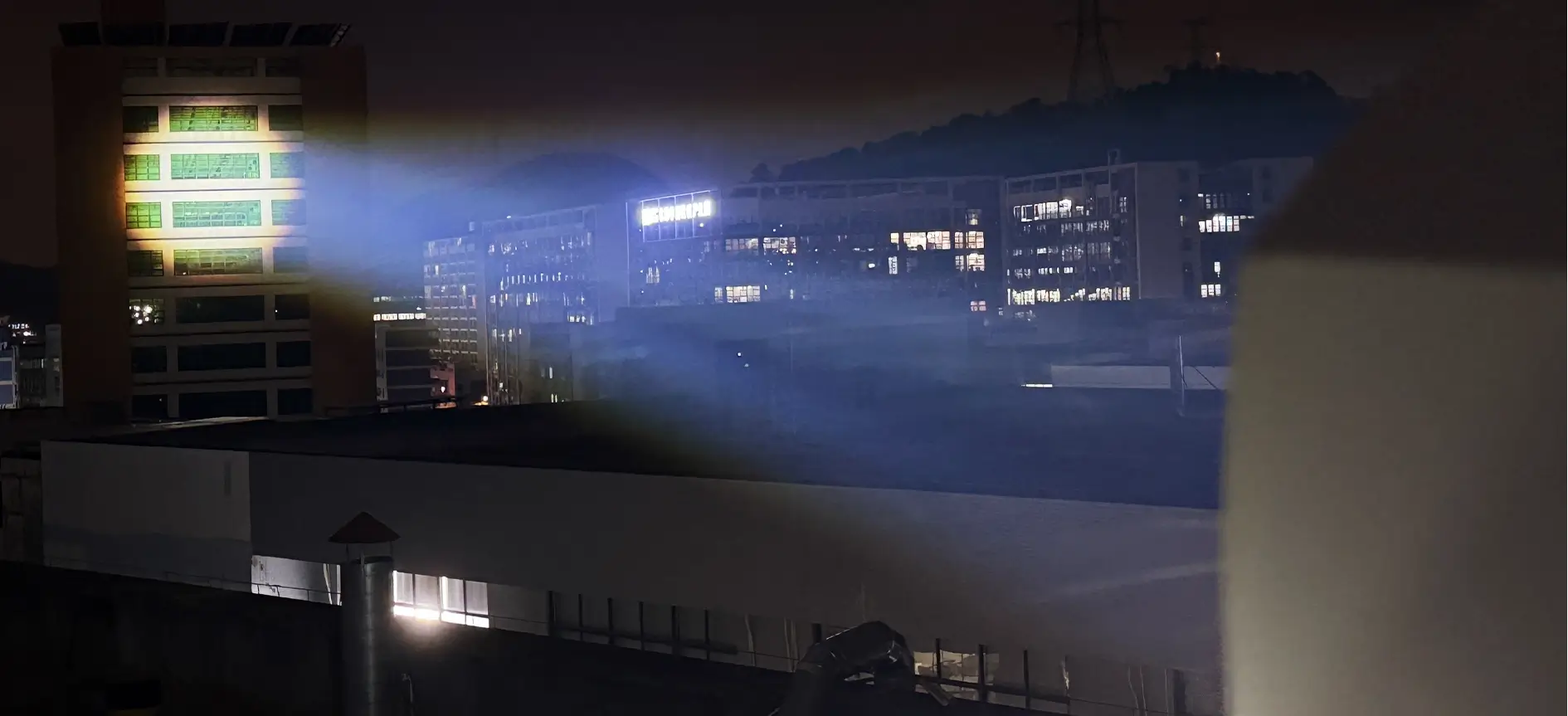
Evolution of Searchlight Light Sources
Traditional searchlights relied on incandescent halogen lamps, followed by high-intensity discharge (HID) xenon and metal halide systems. LED technology has driven the latest shift, offering solid-state reliability.
LED vs Xenon vs Halogen: Technical Comparison
Here's a data-driven breakdown based on typical high-power searchlight implementations.
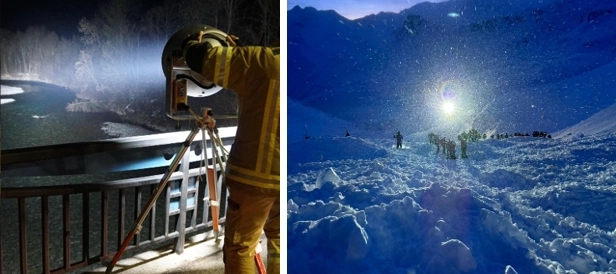
Working Principle
- Halogen: Tungsten filament heated to incandescence in a halogen gas-filled envelope; the halogen cycle redeposits evaporated tungsten to extend life.
- Xenon: High-pressure electrical arc between electrodes excites xenon gas, producing intense white light.
- LED: Electrons recombine with holes in a semiconductor p-n junction, emitting blue photons. A phosphor coating converts part of the blue light into yellow/red, producing balanced white light with desired CCT and CRI.
Lifetime
- Halogen: 200-1,000 hours
- Xenon: ~1,000-2,000 hours (arc tube degradation)
- LED: 30,000-50,000+ hours (L70/L80 metrics) — often 30-60x longer than halogen.
Beam Quality and Distance
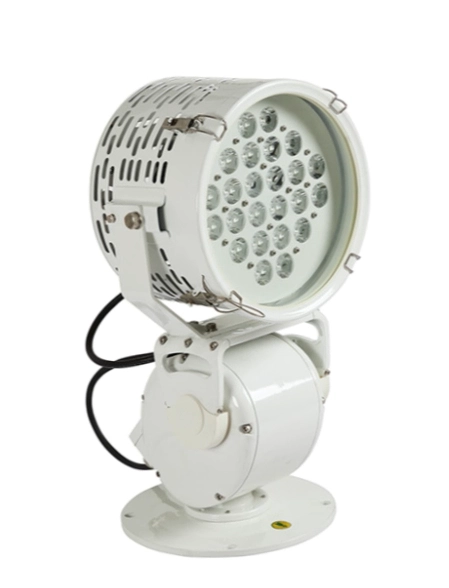
Modern LED searchlights are generally available in multi-LED and single high-power LED designs.
Multi-LED design
Uses multiple low-power LED chips with lens or reflector-based optics. While it delivers high lumen output, the larger emitting surface typically results in wider 5°–8° beam angles, limiting center-beam intensity and long-range illumination performance.
Single high-power LED design
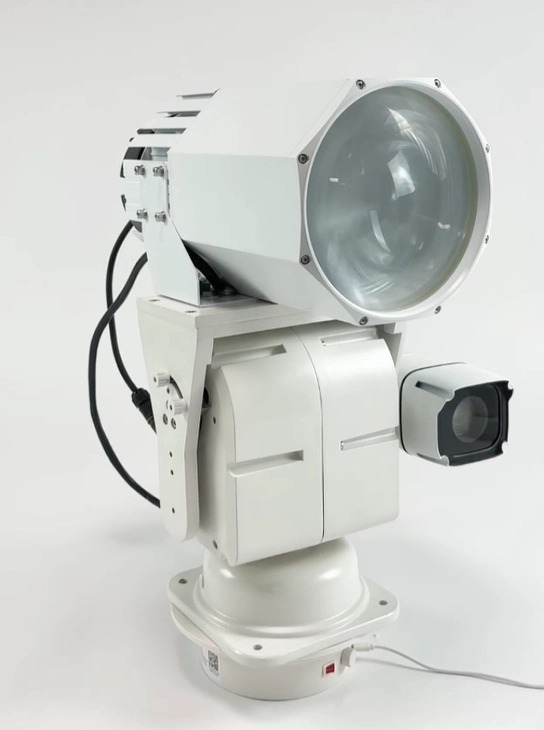
Uses a single high-power LED paired with a precision multi-lens optical system. The smaller light-emitting surface enables beam angles of less than 3°, delivering higher center-beam intensity, greater beam distance, and better penetration through rain, fog, and haze.
Xenon searchlights
Provide good beam focus, but their cross-over beam pattern causes the light to converge and then diverge after the focal point, resulting in uneven beam distribution and reduced illumination uniformity over long distances.
Halogen searchlights
Produce wider beam divergence and lower optical efficiency, making them less suitable for modern industrial and marine long-range lighting applications.
Heat Management
Halogen and xenon generate significant heat, often requiring active cooling. LEDs run cooler and support passive (natural) dissipation via cold-forged aluminum structures.
Startup Time
- LED: Instant full output (<0.5s).
- Xenon: 10-30 seconds warm-up.
- Halogen: Near-instant but ramps to full brightness.
Instant start is vital for emergency response and security applications.
Power Consumption and Efficiency
Lower power consumption: LEDs consume 75% or more less power than Halogen lamps
Maintenance and Reliability
Traditional sources need frequent lamp replacements, reflector cleaning, and fan servicing. LEDs minimize downtime, with features like surge protection, high PF/low THD drivers, and robust stainless steel housings (e.g., 316L) enhancing corrosion and vibration resistance.
Color Rendering (CRI) and CCT
LEDs offer flexible CCT (e.g., 6500K cool white) with high CRI (>80), improving visibility and camera integration. Xenon provides daylight-like quality but less control.
Conclusion: Making Informed Procurement Decisions
Choosing the optimal searchlight light source requires balancing immediate performance with long-term reliability and total cost of ownership (TCO). While xenon and halogen continue to serve certain niche applications, LED technology paired with advanced optics consistently delivers superior efficiency, beam control, and lower lifecycle costs for modern industrial and marine projects.
TUBU’s single-module LED searchlights stand out with their industry-leading design. Compared with traditional multi-source LED searchlights, they deliver a tighter, more focused beam for exceptional long-range illumination.
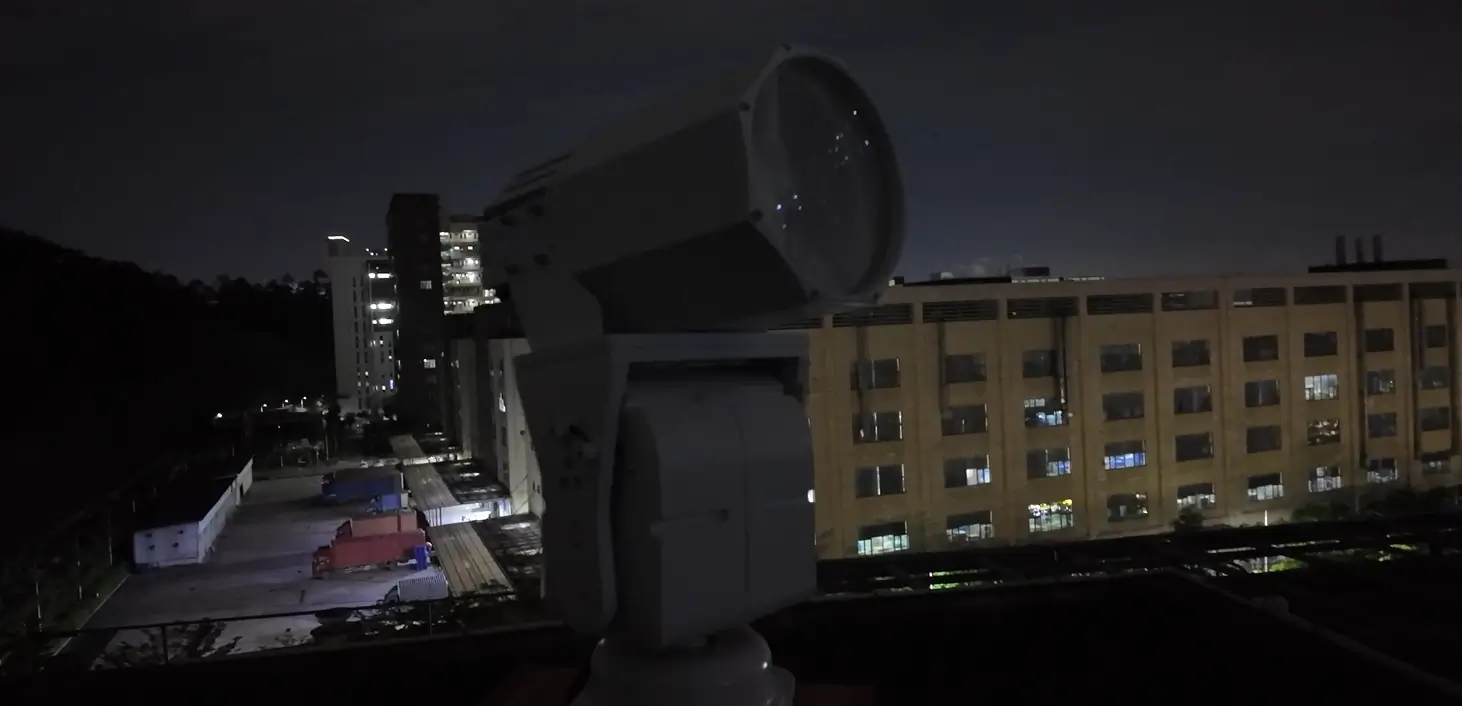
Whether for marine vessels, offshore platforms, ports, search-and-rescue operations, border security, or heavy industrial sites, TUBU single-source LED searchlights provide the dependable long-range performance required in demanding environments.
Want to Learn More About Single-Source LED Searchlights? Contact Us Today.