
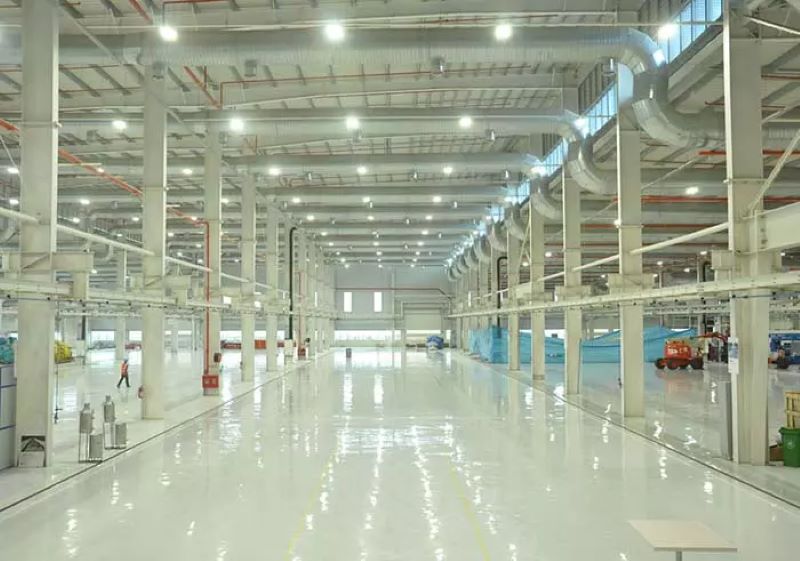

When comparing High Bay and Low Bay warehouses, the key distinction lies in ceiling height and its impact on storage, operations, and costs.For high-volume storage and efficient use of space, High Bay warehouses are ideal. Low Bay warehouses are cost-effective for smaller operations and businesses with limited inventory.Ultimately, the best choice depends on factors like budget, storage requirements, operational preferences, and future growth plans.
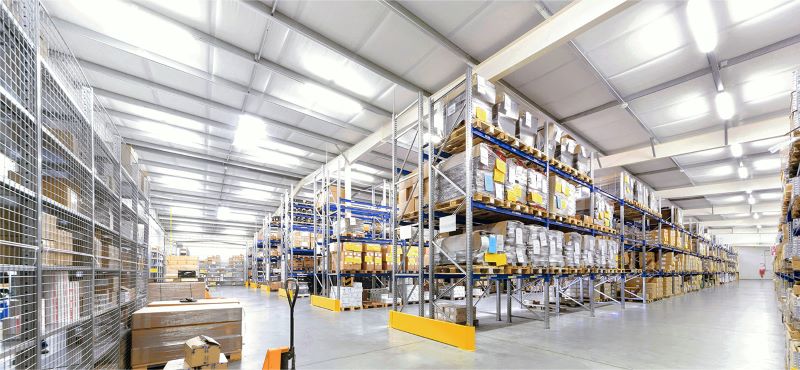
High Bay Warehouse Lighting: Illuminating Your Operations
High bay warehouse lighting plays a crucial role in ensuring optimal working conditions and productivity within warehouse spaces. These specialized lights are designed to provide ample illumination for tasks like picking, packing, and maneuvering large machinery in high-ceilinged warehouses.
Popular High Bay Lighting Technologies:
LED: LEDs are the most popular and energy-efficient option for high bay lighting. They offer long lifespans, high lumen output, and low operating temperatures.
Metal halide: Metal halide lamps are older technologies but offer high lumen output at a lower initial cost compared to LEDs. However, they have shorter lifespans and higher energy consumption.
High-pressure sodium: These lamps are primarily used for outdoor warehouse areas due to their yellowish light, which can be harsh for indoor environments. They offer high efficiency and long lifespans but have poor color rendering.
Induction: Induction lights offer long lifespans, high color rendering, and dimmable capabilities. However, they are typically more expensive than LED options.
Benefits of Implementing High Bay Warehouse Lighting:
Improved safety: Adequate lighting reduces the risk of accidents and injuries by enhancing visibility for workers.
Increased productivity: Brighter workspaces improve worker performance and accuracy in tasks like picking and packing.
Reduced energy costs: Modern high bay lighting solutions, especially LEDs, significantly reduce energy consumption compared to older technologies.
Enhanced inventory management: Proper illumination facilitates clear labeling and identification of inventory, streamlining warehouse operations.
Improved work environment: Brighter and well-lit spaces contribute to a more positive and productive work environment for employees.
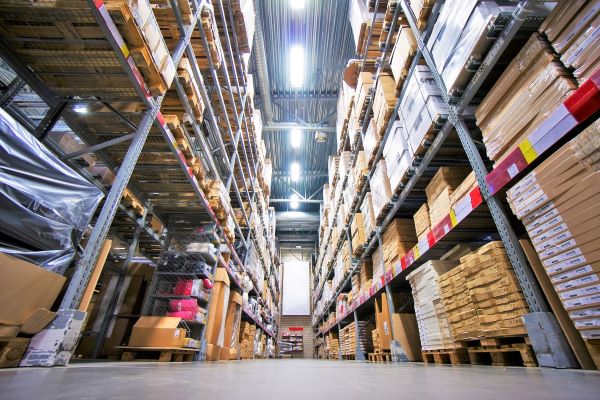
Low Bay Warehouse Lighting: Illuminating Your Operations
Low bay warehouse lighting is essential for providing adequate illumination in industrial settings with ceiling heights between 10 and 20 feet. These specialized lights offer a range of benefits, improving safety, productivity, and overall efficiency within your facility.
Benefits of Implementing Low Bay Warehouse Lighting:
Improved safety: Adequate lighting reduces the risk of accidents and injuries by enhancing visibility for workers.
Increased productivity: Brighter workspaces improve worker performance and accuracy in tasks like picking and packing.
Reduced energy costs: Modern low bay lighting solutions, especially LEDs, significantly reduce energy consumption compared to older technologies.
Enhanced inventory management: Proper illumination facilitates clear labeling and identification of inventory, streamlining warehouse operations.
Improved work environment: Brighter and well-lit spaces contribute to a more positive and productive work environment for employees.
Overall, low bay lighting plays a pivotal role in optimizing warehouse operations. By choosing the right lighting solution based on your specific needs and priorities, you can improve safety, productivity, and overall efficiency within your warehouse facility.
What Is the Difference Between High Bay and Low Bay Warehouse?
Ceiling Height
High Bay: Designed for warehouses with ceilings exceeding 20 feet, typically reaching 45 feet or higher.
Low Bay: Ideal for warehouses with ceiling heights between 10 and 20 feet.
Activities
High Bay: Accommodate large-scale operations involving tall racking systems, heavy machinery like forklifts, and bulk storage of goods.
Low Bay: Suitable for smaller-scale operations with moderate racking heights, lighter machinery, and storage of smaller items.
Lighting
High Bay: Requires high-lumen output, wide beam angle lights like high bay LEDs to provide adequate illumination for high-ceilinged spaces.
Low Bay: Utilizes low bay LEDs or fluorescent lights with sufficient lumen output and beam spread to illuminate lower ceilings effectively.
Examples of Activities
High Bay: Storage and handling of large appliances, furniture, building materials, automotive parts, etc.
Low Bay: Assembly lines, light manufacturing, picking and packing operations, small-scale distribution centers, etc.
Other Considerations
Building Costs: High bay warehouses generally require more construction materials and complex design, leading to higher initial costs.
Energy Consumption: High bay lighting consumes more energy compared to low bay lighting due to the larger area needing illumination.
Accessibility: Low bay warehouses offer easier access to storage areas and equipment due to lower ceilings.
Ultimately, choosing between a high bay or low bay warehouse depends on your specific storage needs, operational requirements, and budget. Analyze your inventory size, operation scale, and future growth plans to determine the most suitable option for your business.
Other Article Recommendations
News
LED Driver: Isolated vs. Non-Isolated Tri-Proof Lights
For tri-proof LED lights used in harsh environments, LED driver design matters [...]
News
5 Best Marine LED Searchlights for Patrol and Search-and-Rescue Vessels
Marine patrol and search-and-rescue vessels need dependable lighting to identify distant objects, [...]
News
LED Searchlight Guide: Installation, Operation and Maintenance
LED searchlights are professional lighting devices designed for long-distance illumination and target [...]
News
Common LED Floodlight Problems: Causes, Inspection, and Solutions
Outdoor LED floodlights are exposed to harsh environmental conditions, including rain, dust, [...]
News
TUBU LED Searchlights: Emergency Rescue Solutions
Effective illumination serves as a lifeline in emergency rescue operations. After years [...]
News
Top 10 Best Applications of Searchlights: Where Are Searchlights Used?
A searchlight is a type of high-intensity lighting equipment capable of directional [...]